Tag: Network Security

  • The Human Firewall: Why Your Employees Are the Missing Link in Combating Today’s #1 Business Risk

    The Human Firewall: Why Your Employees Are the Missing Link in Combating Today’s #1 Business Risk

    Cybersecurity Now Ranks as Top Global Business Risk – Is Your Team Prepared?

    In a significant shift that reflects our changing digital landscape, cybersecurity has emerged as the primary geopolitical risk for businesses worldwide. Recent surveys reveal that 60% of risk decision-makers now rank cybersecurity threats above traditionally dominant concerns like trade wars, resource scarcity, and political instability. This elevation signals a profound transformation in how organizations perceive and prioritize digital threats in their overall risk management strategy.

    Why This Matters for Security and IT Leaders

    The implications of this shift cannot be overstated. For security professionals and IT decision-makers, this represents both validation of longstanding concerns and a clear mandate to strengthen defensive postures. 🔍

    Organizations are responding by allocating larger portions of their budgets to cybersecurity initiatives, recognizing that:

    • Traditional security measures alone have become insufficient against today’s sophisticated threats
    • The financial and reputational consequences of breaches continue to escalate
    • Regulatory compliance requirements are becoming more stringent globally
    • Stakeholder trust increasingly depends on demonstrable security competence

    Perhaps most significantly, this reprioritization acknowledges what security professionals have long understood: effective cybersecurity isn’t just about technology—it’s about people.

    Building the Human Firewall with KnowBe4

    At the heart of addressing this global concern is the recognition that cybersecurity is not a “set it and forget it” proposition. KnowBe4’s Security Awareness Training platform directly addresses this reality through a continuous, engagement-focused approach that transforms employees from potential vulnerabilities into vigilant defenders.

    Unlike traditional one-time training methods that quickly become outdated and forgotten, KnowBe4’s solution combines:

    • Ongoing, adaptive training content that evolves with emerging threats
    • Simulated phishing exercises that provide practical experience in threat recognition
    • Engagement-focused learning strategies that overcome training fatigue
    • Analytics that help security teams measure and improve organizational readiness

    The human-centric approach of KnowBe4’s Security Awareness Training recognizes that employees need to be empowered through education to make informed security decisions. By building what security experts call the “human firewall,” organizations create a crucial last line of defense against the ever-evolving tactics employed by cybercriminals.

    Creating a Security-First Culture

    The elevation of cybersecurity to top-risk status reflects a fundamental truth: organizations with strong security cultures experience fewer breaches. KnowBe4’s Security Awareness Training helps foster this culture by:

    • Providing continuous education that keeps security top-of-mind
    • Turning abstract security concepts into practical, applicable knowledge
    • Creating accountability through measurable improvement metrics
    • Empowering employees to recognize and report suspicious activities

    This approach delivers tangible business benefits beyond just threat mitigation. Organizations implementing robust security awareness programs report improved operational resilience, enhanced customer trust, and reduced incident response costs—all critical advantages in today’s high-risk digital environment.

    Is Your Organization Adapting to This New Risk Reality?

    With cybersecurity now established as the foremost global business risk, the question for leadership teams becomes clear: is your security strategy evolving accordingly? 🚨

    If your organization hasn’t yet implemented continuous security awareness training, you may be overlooking a critical component of modern cyber defense. KnowBe4’s Security Awareness Training provides the tools needed to transform your greatest potential vulnerability—your people—into your strongest security asset.

    Ready to strengthen your human firewall? Let’s discuss how KnowBe4’s Security Awareness Training can help your organization address the world’s #1 business risk through effective, engaging security education.

    Book Your KnowBe4 Demo Now

  • Slash Your Data Center Complexity: Why IT Pros Are Switching to Converged Network Adapters

    Slash Your Data Center Complexity: Why IT Pros Are Switching to Converged Network Adapters

    Simplifying Data Center Connectivity: Understanding the Value of Converged Network Adapters

    In today’s complex data center environments, efficiency is everything. One technology that’s making significant inroads in streamlining connectivity is the Converged Network Adapter (CNA). These powerful devices are changing how organizations approach their network infrastructure by combining multiple functions into a single hardware solution.

    What Are Converged Network Adapters?

    Converged Network Adapters represent an evolution in data center connectivity, merging storage, data, and networking functionality into a unified adapter card. Instead of requiring separate hardware components for Fiber Channel and Ethernet traffic, CNAs provide a consolidated approach that handles both networking and storage needs through a single interface.

    This convergence directly addresses one of the most persistent challenges in modern data centers: the proliferation of adapter cards, cables, and switch ports that create management complexity and increase costs.

    Why CNAs Matter for IT and Security Teams

    For IT professionals managing increasingly complex infrastructures, CNAs offer several compelling advantages:

    1. Simplified Management 🔧 – With fewer physical components to maintain, IT teams can reduce the time spent on hardware management and troubleshooting
    2. Reduced Infrastructure Complexity – Fewer cables and connection points mean fewer potential points of failure
    3. Cost Efficiency 💰 – Consolidated hardware translates to reduced capital expenditure and lower operational costs
    4. Improved Performance – High-speed Ethernet support and offload capabilities for storage protocols enhance overall network performance
    5. Future-Proof Flexibility – The adaptable nature of CNAs makes it easier to accommodate changing organizational needs

    How Ruckus Enhances Network Convergence

    Ruckus has established itself as a leader in the CNA space by developing solutions that address the core challenges of network convergence. The Ruckus CNA offerings deliver enterprise-grade performance while maintaining the simplicity that IT teams need.

    What sets Ruckus apart is their focus on creating CNAs that offer seamless integration with existing infrastructure while providing the advanced features needed for modern data centers:

    • Superior Compatibility – Ruckus CNAs are designed to work with a wide range of server hardware, operating systems, and hypervisors
    • Exceptional Performance – Support for high-speed connectivity options ensures that performance requirements are met even as demands increase
    • Comprehensive Protocol Support – Ruckus ensures their CNAs support the protocols organizations need, including technologies like Fibre Channel over Ethernet (FCoE)
    • Reliable Support – Consistent firmware updates and responsive customer service provide peace of mind for IT teams

    Making the Right CNA Choice

    When evaluating Converged Network Adapters for your organization, several factors should guide your decision-making process:

    Performance Requirements

    Assess your current and future data rate needs (10/25/100GbE) to ensure the CNA you select can handle your expected workloads.

    Infrastructure Compatibility

    Verify compatibility with your existing server hardware, software, and operating systems to avoid integration challenges.

    Protocol Support

    Ensure the CNA supports the specific protocols your storage infrastructure requires.

    Total Cost of Ownership

    Look beyond upfront pricing to consider ongoing management costs, power consumption, and potential scaling needs.

    The Future of Network Convergence

    As data centers continue to evolve, the role of converged technologies like Ruckus CNAs will become increasingly significant. The ability to scale efficiently by simply adding more of the same adapter type rather than multiple different components gives organizations the agility they need in today’s fast-paced technology landscape.

    🔍 Are you currently exploring ways to simplify your data center connectivity? Consider how Ruckus Converged Network Adapters might fit into your infrastructure strategy to reduce complexity while enhancing performance and flexibility. Contact us today to learn more about implementing these powerful solutions in your environment.


    Contact Us For Info

  • Invisible Threats: Why Your Business Needs Dark Web Monitoring Before It’s Too Late

    Invisible Threats: Why Your Business Needs Dark Web Monitoring Before It’s Too Late

    Beyond the Surface: How Dark Web Monitoring Protects Your Business from Hidden Threats

    In today’s cybersecurity landscape, what you can’t see might be your biggest threat. While organizations focus on defending their networks from direct attacks, sensitive data and credentials are often already being traded on dark web marketplaces—completely invisible to traditional security measures.

    The Growing Dark Web Threat Landscape

    The dark web represents a significant blind spot for many security teams. This hidden network of websites, accessible only through specialized browsers, has become a thriving marketplace for stolen corporate data, credentials, and personal information.

    What makes this particularly dangerous is that many organizations remain unaware their information has been compromised until it’s too late. By the time credentials appear on dark web forums, threat actors may have already been exploiting these vulnerabilities for weeks or months.

    🚨 The consequences can be severe:

    • Financial losses from fraud and theft
    • Lasting reputational damage
    • Potential regulatory penalties and legal liabilities
    • Extended business disruption

    Shifting from Reactive to Proactive Security

    Traditional security approaches focus primarily on preventing breaches. However, in today’s threat landscape, assuming some level of compromise is inevitable represents a more realistic stance. This is where dark web monitoring becomes essential.

    Dark web monitoring allows security teams to detect if their organization’s information has been compromised and is being sold on illicit marketplaces. This early warning system can dramatically reduce the window of vulnerability between data exposure and discovery.

    How ManageEngine Log360 Transforms Dark Web Defense

    ManageEngine Log360 offers comprehensive dark web monitoring capabilities as part of its SIEM (Security Information and Event Management) solution, helping organizations detect compromised credentials and sensitive data before they can be exploited.

    Log360’s dark web monitoring provides:

    24/7 Dark Web Intelligence

    • Continuous scanning of dark web forums, marketplaces, and other sources
    • Real-time alerts when organizational data or credentials are discovered
    • Detailed reports on the type and extent of exposed information

    Rapid Response Capabilities

    • Immediate notification when compromised credentials are detected
    • Automated remediation workflows including forced password resets
    • Integration with existing security systems and incident response processes

    PII Exposure Detection

    • Monitoring for exposed personally identifiable information
    • Compliance support for regulations requiring data breach notification
    • Risk assessment of exposed information to prioritize response

    Integrating Dark Web Monitoring into Your Security Strategy

    For security professionals, implementing dark web monitoring represents a critical evolution in defense strategy. Rather than simply waiting for attacks to occur, organizations can proactively identify vulnerabilities before they’re exploited.

    Log360’s dark web monitoring capabilities seamlessly integrate with its broader SIEM functionality, providing context-aware security intelligence. This allows security teams to correlate dark web findings with internal network events, creating a more comprehensive security posture.

    Staying Ahead of Emerging Threats

    In today’s rapidly evolving threat landscape, ignoring what happens on the dark web is no longer an option for organizations serious about data security. By implementing ManageEngine Log360’s dark web monitoring capabilities, security teams can:

    • Detect compromised credentials before they’re exploited
    • Identify data breaches that might otherwise go unnoticed
    • Comply with regulatory requirements for data protection
    • Gain visibility into underground threats targeting their industry

    🔒 The dark web may be hidden, but with the right monitoring tools, your organization’s security posture doesn’t have to operate in the dark.

    Take Action Today

    Is your organization prepared to detect if your sensitive data or credentials are already circulating on the dark web? Schedule a demo of ManageEngine Log360 today to see how dark web monitoring can strengthen your security defenses and provide the visibility you need to protect your most valuable assets.


    Contact Us For Info

  • KnowBe4: Unraveling the Leader in Cybersecurity Training

    KnowBe4: Unraveling the Leader in Cybersecurity Training

    KnowBe4: Unraveling the Leader in Cybersecurity Training

    KnowBe4 has emerged as a pivotal force in the realm of cybersecurity, offering a comprehensive suite of training modules designed to equip organizations with the knowledge to fend off cyber threats. Through a blend of engaging training material and automated phishing simulations, KnowBe4 arms employees with the necessary skills to identify and mitigate potential cyber attacks, fostering a culture of security awareness training across various sectors.

    At the core of KnowBe4’s success lies its commitment to innovation within the cybersecurity training landscape. By continuously updating its training modules to reflect the latest cyber threats and trends, KnowBe4 ensures that organizations are always one step ahead. This proactive approach to cybersecurity education is complemented by KnowBe4’s use of real-world phishing simulations, allowing employees to experience the dynamics of actual phishing attempts in a controlled environment.

    Unlocking the Essence of KnowBe4

    KnowBe4 Security Awareness Training

    KnowBe4 stands out in the cybersecurity space through its unique amalgamation of automated phishing simulations, comprehensive training materials, and an extensive library of training modules. This blend not only demystifies the complex world of cyber threats but also empowers organizations to build a resilient and informed workforce. KnowBe4’s platform is designed to cater to various learning styles, ensuring that every employee can effectively contribute to their organization’s cyber defense strategy.

    How KnowBe4 Empowers Organizations Through Cybersecurity Training

    KnowBe4 empowers organizations by providing a robust framework of training modules that cover a wide range of cyber threats, including real-world phishing scenarios. Its managed service approach ensures that businesses can implement a tailored security training program that aligns with their specific needs and threats. By leveraging KnowBe4’s comprehensive training tools, organizations can significantly enhance their employees’ ability to recognize and respond to cyber threats, effectively reducing the risk of a successful attack.

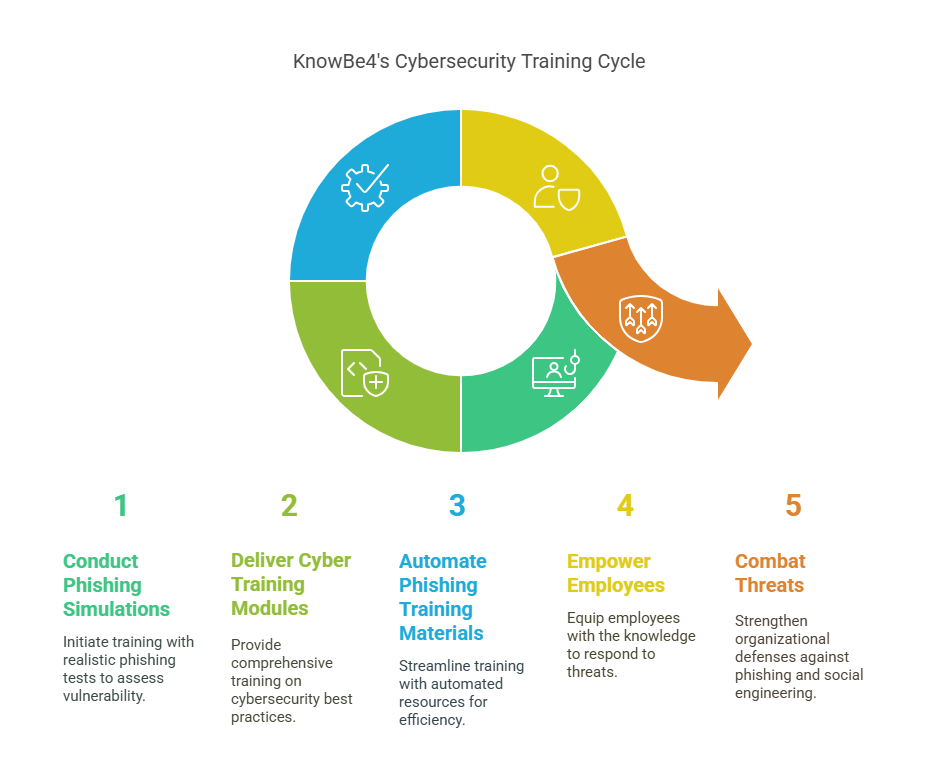
    The Unique Approach of KnowBe4 to Security Awareness

    KnowBe4s Security 
 Awareness Training Cycle

    KnowBe4’s unique approach to security training revolves around creating a culture of continuous learning and vigilance. Unlike traditional security training programs, KnowBe4 engages users with interactive content and real-life simulations that mirror the latest phishing tactics. This method ensures that employees are not only well-versed in theoretical knowledge but are also prepared to apply this knowledge in practical, real-world situations, making it a leader in fostering security awareness.

    Analyzing KnowBe4’s Offerings

    KnowBe4’s offerings are a testament to its leadership in the cybersecurity training industry. Its platform provides a comprehensive suite of tools and resources that cater to the evolving needs of modern organizations seeking to bolster their cyber defenses.

    Human Risk Management

    Human risk is growing exponentially as technology becomes more woven into everyday routines. Recent research from KnowBe4 indicates 62% of surveyed organizations experienced one or more cyber incidents in the past year linked to human risk.  Their new HRM+ platform focuses on combatting this specific area.  On average, these businesses encountered three different types of breaches three times each, with 96% involving employees who clicked malicious links or opened harmful attachments.

    The Pros of Implementing KnowBe4 in Your Security Strategy

    Integrating KnowBe4 into an organization’s security strategy introduces a proactive layer of defense against cyber threats.

    KnowBe4’s training solutions offer several advantages, including increased awareness of phishing scams, a reduction in successful cyber attacks, and the cultivation of a security-first culture within organizations. By leveraging KnowBe4’s automated phishing simulations and engaging training modules, companies can significantly enhance their workforce’s ability to identify and neutralize potential threats, thereby strengthening their overall security posture.

    The Verdict from the Market

    KnowBe4’s market standing is a reflection of its effectiveness in enhancing organizational security through comprehensive training programs.

    How Businesses Are Leveraging KnowBe4 for Enhanced Security

    Organizations across industries are leveraging KnowBe4’s training solutions to fortify their defenses against cyber threats. The platform’s user-friendly approach and up-to-date content have made it a preferred choice for businesses seeking to elevate their security awareness levels.

    Customer Insights: Real Feedback from KnowBe4 Users

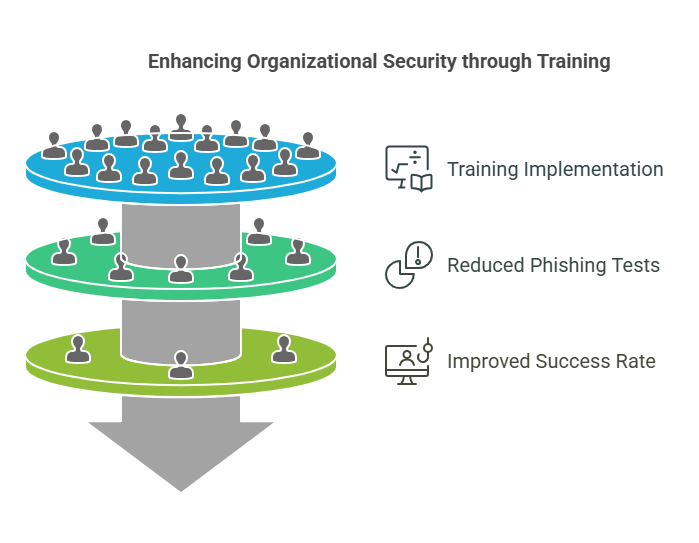
    Enhancing Organizational Security Through Training

    Feedback from KnowBe4 users highlights the platform’s impact in reducing the frequency and success rate of phishing tests, underscoring the tangible benefits of its training programs in improving organizational security.

    Why KnowBe4 Stands Out Amidst a Sea of Options

    KnowBe4 sets itself apart in the crowded field of cybersecurity training by understanding that the human element is both the biggest asset and the weakest link in cyber defense. Its platform combines security awareness with interactive training, making it easier for organizations to foster a culture of vigilance against phishing attempts and other cyber threats. KnowBe4’s platform continually updates its fresh content, ensuring users are prepared for the latest security challenges. This approach not only educates but empowers employees across organizations worldwide to make smarter security decisions, solidifying KnowBe4’s position as a leader in the awareness training platform space.

    Book Your KnowBe4 Demo Now

  • Top 5 Wifi Security Tweaks and How They Protect Your Network

    Top 5 Wifi Security Tweaks and How They Protect Your Network

    Top 5 Wifi Security Tweaks and How They Protect Your Network

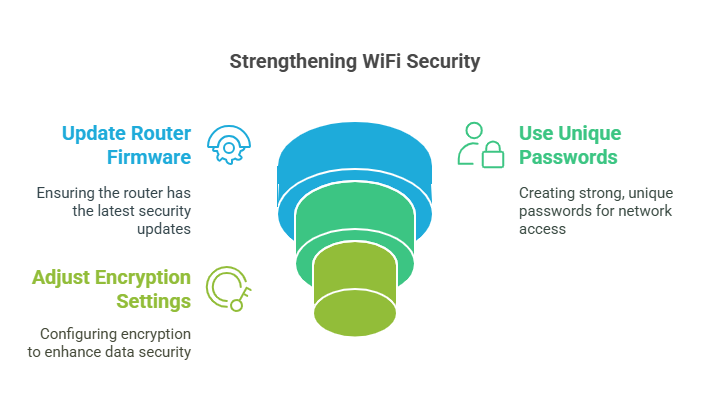
    Enhancing wifi security is crucial for protecting your network from unauthorized access and cyber threats. By implementing simple security tweaks, you can significantly reduce the risk of your network being compromised. These measures include updating the router’s firmware, using unique passwords, and adjusting your encryption settings, all of which safeguard your network against potential breaches.
    Top 5 Wifi Security Tweaks

    One effective security tweak is to ensure your router’s firmware is regularly updated. Firmware updates often contain security enhancements and bug fixes that protect your network. Additionally, using a unique password for your wifi network prevents unauthorized access, making it difficult for hackers to gain entry. Encryption settings also play a vital role; by choosing advanced encryption methods, you ensure that the data transmitted over your network is secure.

    Moreover, disabling features that compromise security, such as remote access, and creating separate networks for guests, further enhances network protection. These wifi security tweaks are essential for maintaining a secure internet connection, protecting personal information, and preventing unauthorized access to your network. By staying informed and applying these simple yet effective measures, you can enjoy a safer online experience.

    Understanding the Importance of Wi-Fi Security

    Wi-Fi security is fundamental in today’s digitally connected world. It acts as the first line of defense against cyber threats that can compromise personal data and sensitive information. Ensuring your Wi-Fi network is secure prevents unauthorized access and protects against potential cyber-attacks, safeguarding your online activities.

    Without proper security measures, your network becomes an easy target for hackers. This vulnerability can lead to the theft of personal information, financial loss, and even identity theft. Therefore, understanding and implementing Wi-Fi security measures is crucial for anyone who uses the internet.

    The Risks of an Unprotected Wi-Fi Network
    Risks of an Unprotected Wifi Network

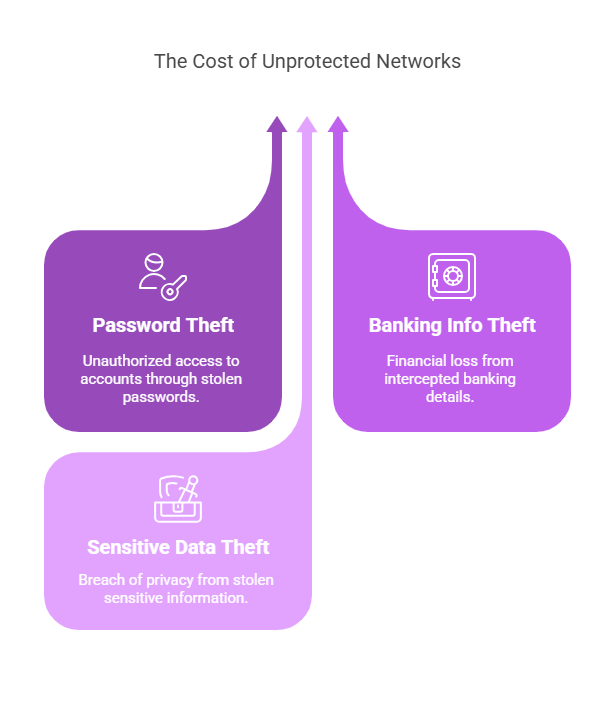
    An unprotected Wi-Fi network is a goldmine for cybercriminals. It allows them easy access to intercept and steal personal data transmitted over the network. Common risks include the theft of passwords, banking information, and other sensitive data that can lead to financial and reputational damage.

    Moreover, without security measures like changing the default username and password, your network can be used to distribute malware or launch attacks on other networks, implicating you in cybercrimes. Therefore, securing your home Wi-Fi network is not just about protecting your internet connection; it’s about safeguarding your entire digital life.

    The Role of Wi-Fi Security in Protecting Personal Information

    Wi-Fi security plays a crucial role in protecting personal data from cyber threats. With the increasing amount of sensitive information being transmitted over Wi-Fi networks, ensuring that your network is secure is more important than ever. Proper security measures prevent unauthorized access and ensure that your personal data remains confidential and safe from potential cyber-attacks.

    By implementing strong Wi-Fi security protocols, you create a barrier that shields your personal information from hackers and cybercriminals. This protection is vital in preventing identity theft, financial fraud, and the unauthorized use of your personal data, maintaining your privacy and security in the digital realm.

    1. Enhance Your Encryption Settings
    Enhance your encryption settings.

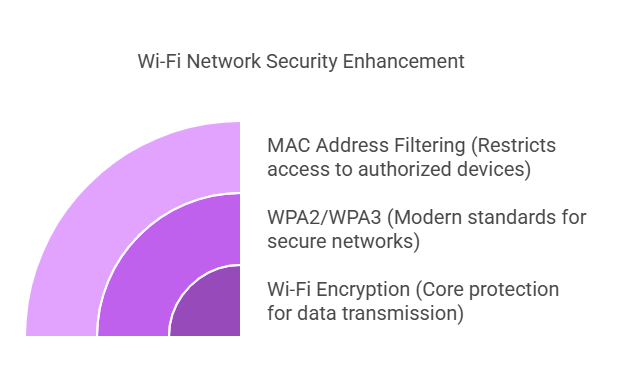
    Enhancing your encryption settings is a fundamental step in securing your Wi-Fi network. Modern wi-fi routers come with options for encryption, such as WPA2 or WPA3, which safeguard your network by encrypting the data transmitted over it. Additionally, incorporating MAC address filtering adds an extra layer of security, ensuring only authorized devices can connect to your network.

    Switching to WPA3 for Optimal Protection

    WPA3 represents the latest advancement in network security, providing a more robust wireless security protocol than its predecessors. It offers enhanced protection against common cyber threats, ensuring that your Wi-Fi network remains secure against potential attacks. Upgrading to WPA3 is a critical step in fortifying your network’s defenses.

    Why WPA2 or WPA3 with AES Beats Other Encryption Methods

    WPA2 and WPA3 with AES are considered the gold standard for Wi-Fi encryption. They provide a high level of security by encrypting network traffic, which makes it extremely difficult for hackers to intercept or decipher the data transmitted over your Wi-Fi signal. This level of encryption is crucial for protecting sensitive information against cyber threats.

    Compared to older methods like WEP encryption, WPA2 and WPA3 with AES offer significantly improved security features. WEP encryption is outdated and easily cracked by modern hackers, making it inadequate for today’s security needs. Therefore, using WPA2 or WPA3 with AES is essential for maintaining a secure Wi-Fi network.

    The Pitfalls of Using the Wrong Wi-Fi Encryption

    Using outdated or weak Wi-Fi encryption can leave your network vulnerable to attacks. Hackers can easily exploit these vulnerabilities to gain unauthorized access to your network and intercept the data from connected devices. This exposure can lead to data breaches and compromise personal and sensitive information.

    Turning Off WPS for Increased Security

    While the Wi-Fi Protected Setup (WPS) feature offers convenience, it also presents a significant security risk. WPS vulnerabilities can be exploited by attackers to gain unauthorized access to your network. Disabling WPS enhances your network security by eliminating this potential entry point for hackers.

    By turning off WPS, you force all devices to connect through more secure methods, requiring a network security key or the use of a wireless security protocol. This step greatly reduces the risk of unauthorized access, ensuring your network remains protected against potential security breaches.

    2. Update Your Network Regularly
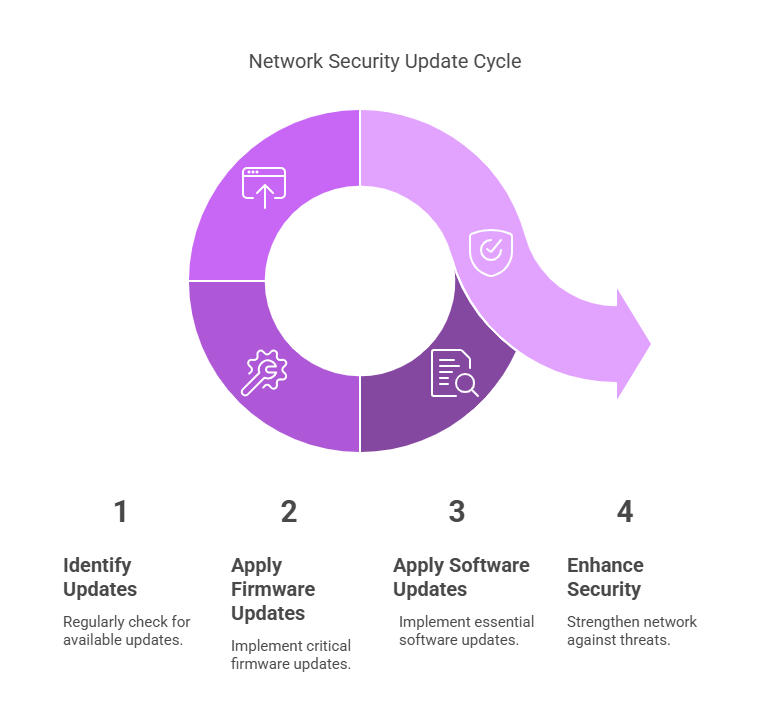
    Update Your Network Regularly

    Regularly updating your network is crucial for maintaining its security. Firmware updates and software updates often contain critical security enhancements that protect your network against new threats. Ensuring these updates are applied promptly is key to safeguarding your network’s integrity.

    The Critical Role of Firmware Updates

    Firmware updates play a vital role in keeping wi-fi routers secure. Manufacturers release these updates to patch vulnerabilities and enhance the router’s security features. Setting your router to automatically update ensures you’re always protected against the latest threats without having to manually check for updates.

    How Regular Updates Prevent Security Breaches

    Applying firmware updates regularly is essential for preventing security breaches. These updates fix vulnerabilities that could be exploited by hackers to gain unauthorized access to your network. By enabling your router to automatically update, you ensure your network benefits from the latest security enhancements, minimizing the risk of cyber-attacks.

    Automatically updating your router not only simplifies the maintenance of your network’s security but also ensures that your defenses are up-to-date. This proactive approach is crucial for protecting against emerging threats and keeping your network secure.

    Custom DNS Servers: A Layer of Extra Security

    Using custom DNS servers adds an extra layer of network security. By choosing a DNS server beyond your ISP, you can gain additional security features, such as phishing protection and content filtering, which enhance your network’s overall security posture.

    Choosing the Right DNS Server Beyond Your ISP

    Selecting the right DNS server is crucial for enhancing your network security. Some DNS servers offer advanced security features that protect against phishing attacks and block access to malicious sites. These features add an additional layer of security, helping to safeguard your network against a wide range of cyber threats.

    Moreover, by choosing a DNS server that prioritizes privacy and does not log your internet activity, you can further protect your online privacy. This consideration is especially important in today’s digital age, where data privacy is a significant concern. Making an informed choice about your DNS server can significantly enhance your network’s security and privacy.

    3. Disable Features that Compromise Security
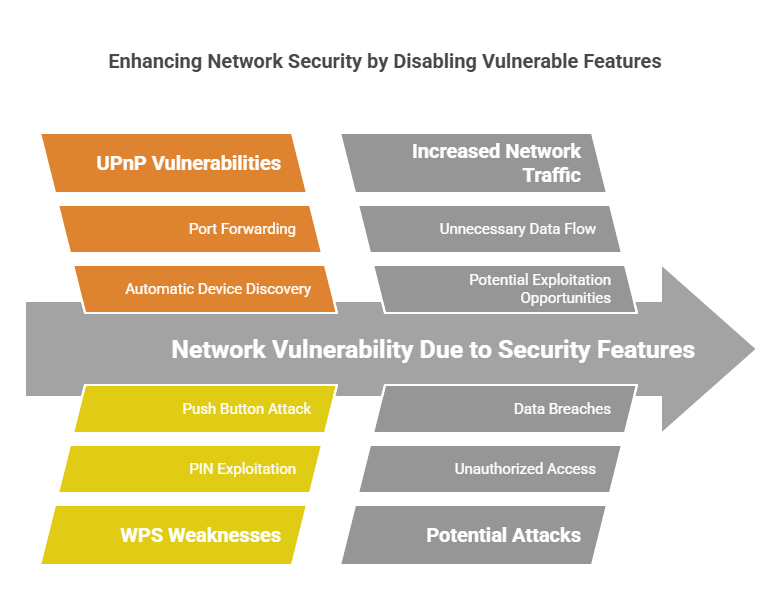
    Disable Features That Compromise Security

    Disabling features that compromise security is essential for maintaining a secure network. Features like UPnP (Universal Plug and Play) and WPS (Wi-Fi Protected Setup) can make your network more vulnerable to attacks. By turning these features off, you reduce unnecessary network traffic that could be exploited by malicious actors, safeguarding your network’s integrity.

    Turning Off UPnP and NAT-PMP to Close Unnecessary Ports

    Universal Plug and Play (UPnP) and Network Address Translation Port Mapping Protocol (NAT-PMP) are features that make it easier for devices to communicate over a network by opening ports automatically. However, this convenience can also be a security risk. By automatically opening ports, they can potentially allow unauthorized devices and potential attackers to gain access to your network. Turning off UPnP and NAT-PMP in your wireless router’s settings helps close these unnecessary ports and secure your router’s configuration.

    The Security Nightmare of Open Ports

    Open ports can be a security nightmare because they act as gateways for potential attackers to enter your network. Network Address Translation (NAT) helps mask your internal network addresses, but when ports are left open, it can provide a direct path for attackers. This vulnerability can compromise the privacy and integrity of your network, leading to unauthorized access and data breaches.

    To mitigate this risk, it’s crucial to manage which ports are open and to understand the purpose of each. Regularly auditing your port status and ensuring that only necessary ports are open for your network’s operation can greatly reduce the risk of cyber threats. This proactive approach to network security can save you from potential data loss and privacy violations.

    The Need to Disable Remote Access

    Remote access allows users to connect to the network from different locations, but it can also be a doorway for attackers to infiltrate your network. Disabling remote access features on your router ensures that control over your network remains strictly within your local environment. This step is essential in protecting your network from unauthorized access and securing your personal information.

    Limiting Administration Access to Your Local Network Only

    Limiting administration access to your local network enhances your security by ensuring that only users within your network can make changes to the router’s configuration. This prevents external attackers from modifying your network settings or installing malicious software. By restricting access to the network’s administration interface to local connections only, you significantly reduce the risk of external breaches.

    Furthermore, implementing strong, unique passwords for router access and changing these passwords regularly can fortify your network against unauthorized attempts to gain entry. Combining these measures with disabling remote access complements your network’s security framework, making it challenging for potential attackers to breach your system.

    4. Create a Separate Network for Guests
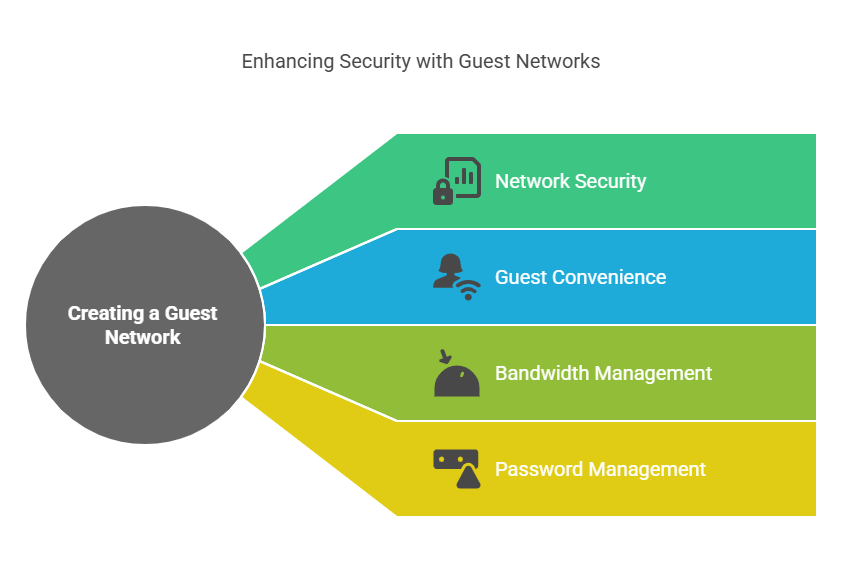
    Create Seperate Guest Network

    Creating a separate network for guests is a strategic move for enhancing network security. A guest network allows visitors to access the internet without compromising the security of the main network. This segregation ensures that your personal devices and sensitive information remain protected from potential threats that guest devices might carry.

    This approach not only secures your primary network but also provides a courtesy to guests by offering them internet access. Adjusting the settings to limit bandwidth on the guest network can prevent it from slowing down your main network. Regularly changing the guest network’s password also maintains a high level of security.

    The Benefits of a Guest Network

    A guest network is beneficial because it isolates guest devices from your main network, ensuring that your personal and business data remain secure. It acts as a barrier that prevents guests from accessing your network’s shared files, printers, and other devices. Providing internet access to visitors without compromising the integrity of your network enhances security while being hospitable.

    Isolating Untrusted Devices to Protect Your Main Network

    Isolating untrusted devices on a guest network safeguards your main network against potential threats. This separation ensures that any malware or security threats present on guest devices do not affect your network’s devices. It’s a proactive step towards maintaining the health and security of your primary network.

    Moreover, implementing a guest network allows for better control and monitoring of network access. You can set restrictions and monitor usage on the guest network without impacting the functionality of your main network. This level of control is crucial in preventing unauthorized access and protecting sensitive information.

    5. Adopt Advanced Security Measures
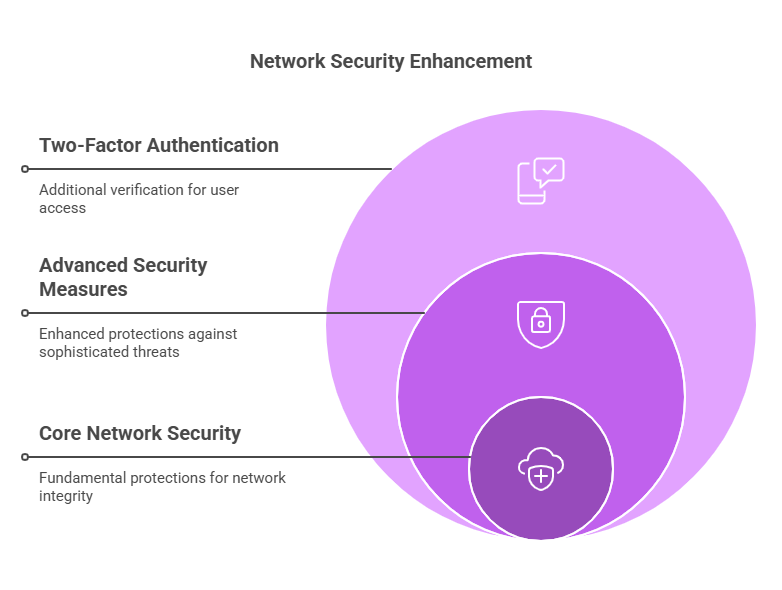
    Adopt Advanced Security Measures

    Adopting advanced security measures is crucial in today’s digital age to protect your network against sophisticated threats. Network security is a critical aspect that requires continuous attention and enhancement. By implementing additional security layers, you can safeguard your network from unauthorized access and ensure the confidentiality, integrity, and availability of your data.

    Implementing Two-Factor Authentication (2FA)

    Implementing Two-Factor Authentication (2FA) adds an extra layer of security to your network. This method requires users to provide two different types of information before gaining access to the network. By adding this additional verification step, it becomes much harder for unauthorized users to compromise your network’s security.

    How 2FA Adds an Extra Layer of Security

    Two-Factor Authentication (2FA) significantly enhances network security by requiring a second form of verification beyond just a password. This could be a text message code, an email, or an authentication app approval. With 2FA, even if a password is compromised, the chances of an unauthorized user gaining access to the network are greatly reduced.

    The implementation of 2FA acts as a deterrent against potential attackers. It’s an effective way to protect sensitive data and network resources from being exploited. For businesses and individuals alike, adopting 2FA is a smart step towards fortifying their network security posture.

    The Necessity of Using Strong, Unique Passwords

    Using strong, unique passwords is fundamental to network security. A robust password acts as the first line of defense in preventing unauthorized access. Changing the default passwords and using a unique identifier for your network is essential. It helps in protecting the network from hackers attempting to connect to the network. Employing complex passwords that are difficult to guess ensures that your network remains secure from potential intrusions.

    Password Management Tips for Enhanced Security

    Effective network security begins with strong password management. Regular firmware updates and changing the security settings are critical steps in safeguarding your network. For all devices that connect to your network, ensure that each has a unique, complex password. This reduces the risk of unauthorized access and enhances your overall security posture.

    Additionally, employing a password manager can help in generating and storing strong passwords for various devices and services. This tool can significantly improve your network security by ensuring that passwords are both strong and unique across all access points. Keeping your network’s firmware updated also plays a crucial role in protecting against vulnerabilities that attackers might exploit.

    Proactive Steps Towards Secure Wi-Fi Use

    Securing your home Wi-Fi network involves several proactive steps. Changing the default password and default username and password is the first critical step. Enabling WPA2 or WPA3 encryption scrambles the information sent over your network, making it harder for outsiders to intercept. Ensuring your router’s firewall is turned on adds another layer of protection against potential cyber threats.

    Avoiding the use of public Wi-Fi networks without a VPN encrypts your data, protecting it from eavesdroppers. For devices like your phone or tablet, regularly updating the router software can prevent security loopholes. These measures, along with disabling Wi-Fi Protected Setup (WPS) and remote access when not needed, play a vital role in protecting your home Wi-Fi network from unauthorized access.

    The Importance of a Comprehensive Wi-Fi Security Strategy

    A comprehensive Wi-Fi security strategy is essential in safeguarding against cyber threats and ensuring the integrity of your network. It involves a multi-layered approach that combines technical measures, such as encryption and firewalls, with user education on best practices. Keeping informed about the latest security risks and regularly updating your network’s defenses are critical components of a robust security strategy.

    By adopting a holistic approach to Wi-Fi security, you can protect not only your personal and financial information but also the devices connected to your network. This proactive stance helps in preventing unauthorized access and securing your digital footprint against potential cyber attacks.

    Educating Users on Wi-Fi Security Best Practices

    Educating users about Wi-Fi security best practices is key to maintaining a secure network. Awareness of potential cyber threats and knowledge of how to avoid them can significantly reduce the risk of security breaches. Users should be informed about the dangers of connecting to unknown networks and the importance of using secure websites.

    Additionally, updating older devices and ensuring they have the latest security patches is crucial for network integrity. Teaching users to recognize phishing attempts and to secure their devices with strong passwords can greatly enhance a network’s defense against malicious activities. Education is a powerful tool in the fight against cyber threats, making it an indispensable part of a comprehensive Wi-Fi security strategy.

    Safeguarding Against Future Threats

    As technology advances, so do the methods employed by cyber criminals to exploit Wi-Fi networks. Staying ahead of these threats requires a proactive approach, focusing on both current and future risks. By understanding the landscape of digital threats, individuals and organizations can better prepare their defenses against unauthorized access and data breaches. This forward-thinking strategy is crucial for maintaining the integrity and security of Wi-Fi networks.

    Part of safeguarding against future threats involves embracing new technologies and security protocols. The adoption of encrypted DNS and more sophisticated encryption methods plays a pivotal role in this process. Additionally, forming technology alliances and participating in cybersecurity communities can provide valuable insights into emerging risks and the latest defensive tactics. These collective efforts contribute significantly to the resilience of network security, ensuring that Wi-Fi users can navigate the digital world more safely.

    Staying Informed About Emerging Wi-Fi Security Risks

    With cyber criminals constantly evolving their tactics, it is vital to stay informed about new Wi-Fi security risks. This involves keeping up to date with the latest security research, as well as any reported breaches or exploits. Awareness of these risks allows users and administrators to adjust their security measures accordingly, minimizing the potential for unauthorized access. Regularly consulting reputable security news sources and attending cybersecurity conferences can help in staying ahead of potential threats.

    Implementing a strategy that includes monitoring the security landscape helps in identifying vulnerabilities within a Wi-Fi network before they can be exploited. This proactive approach to security not only protects sensitive information but also preserves the trust of those who rely on the network. By staying informed, users can implement timely updates and refine their security practices, further fortifying their defenses against emerging threats.

    The Role of Technology Alliances in Strengthening Network Security

    Technology alliances play a critical role in bolstering Wi-Fi security across the board. These collaborations between technology companies, security experts, and regulatory bodies lead to the development of more robust security standards and practices. By sharing knowledge and resources, members of these alliances can collectively address vulnerabilities and enhance the overall security of Wi-Fi networks. This cooperative effort is essential for staying ahead of cyber criminals and safeguarding digital information.

    Such alliances also facilitate the rapid dissemination of information regarding new threats and vulnerabilities, enabling quicker responses to potential security breaches. Furthermore, they often contribute to the development of new security technologies and protocols, such as encrypted DNS, which can significantly improve the security of Wi-Fi networks. Through these partnerships, the digital community benefits from a unified front against cyber threats, making the internet a safer place for everyone.

    The Ongoing Journey of Wi-Fi Security

    The landscape of Wi-Fi security is ever-changing, with new challenges and solutions emerging regularly. This ongoing journey requires constant vigilance and adaptation to ensure networks remain secure. As methods of unauthorized access evolve, so too must the strategies employed to prevent them. This dynamic environment demands that individuals and organizations remain committed to strengthening their Wi-Fi security over time, adapting to the latest threats and employing the most effective defenses available.

    Part of this evolutionary process involves learning from past security incidents and integrating those lessons into future security planning. This iterative approach helps in refining and enhancing Wi-Fi security measures, ensuring they are capable of protecting against both current and future threats. The journey of Wi-Fi security is one of continuous improvement, with each step forward making the digital world a safer place to connect and share.

    The Evolution of Wi-Fi Security Measures

    Wi-Fi security has seen significant advancements since its inception, evolving from simple password protection to sophisticated encryption methods. This evolution has been driven by the need to protect against unauthorized access and ensure the privacy of users. As cyber criminals have developed more complex methods of attack, Wi-Fi security measures have similarly advanced. This includes the implementation of stronger encryption methods, the use of MAC addresses filtering, and the adoption of technologies designed to secure Apple devices and other IP addresses.

    The shift towards more advanced security measures reflects the growing understanding of the complexities involved in protecting Wi-Fi networks. Recognizing the limitations of early security protocols, developers and security experts have worked diligently to introduce more robust solutions, such as encrypted DNS. These advancements not only provide stronger protection against cyber threats but also serve as a testament to the ongoing commitment to enhance Wi-Fi security. As technology continues to progress, so too will the methods used to safeguard digital networks and the information they transmit.

    The Continuous Need for Vigilance and Updates

    The fight against cyber threats is an ongoing battle that requires continuous vigilance and regular updates. Cyber criminals are persistently finding new ways to breach networks, making it essential for Wi-Fi security measures to evolve in response. This includes the need to automatically install updates to ensure that security software and firmware are equipped with the latest defenses against potential attacks. By keeping systems up to date, users can protect themselves from vulnerabilities that could be exploited by attackers.

    Additionally, the adoption of automated security protocols, such as SSID broadcast disabling and controls over which devices are allowed to connect, further enhances network security. Employing strong data protection practices, including the use of robust encryption methods that encrypt data, is crucial for defending against cyber criminals. These steps, combined with ongoing education on security best practices, form the cornerstone of a comprehensive strategy to maintain Wi-Fi security. The continuous need for vigilance and updates is paramount in ensuring that networks remain secure in the face of evolving threats.

    Some of our wireless solutions providers are listed here.

    Contact Us For More Information

  • Email Security Service: Your Ultimate Guide to Protection

    Email Security Service: Your Ultimate Guide to Protection

    Email Security Service: Your Ultimate Guide to Protection

    In an era where digital correspondence forms the backbone of corporate communication, securing one’s email ecosystem has transcended beyond a mere recommendation to an absolute necessity. With cyber threats evolving at an unprecedented rate, organizations are finding themselves in a constant battle against schemes aimed at data exfiltration, making the adoption of robust email security services a critical step towards safeguarding sensitive information.

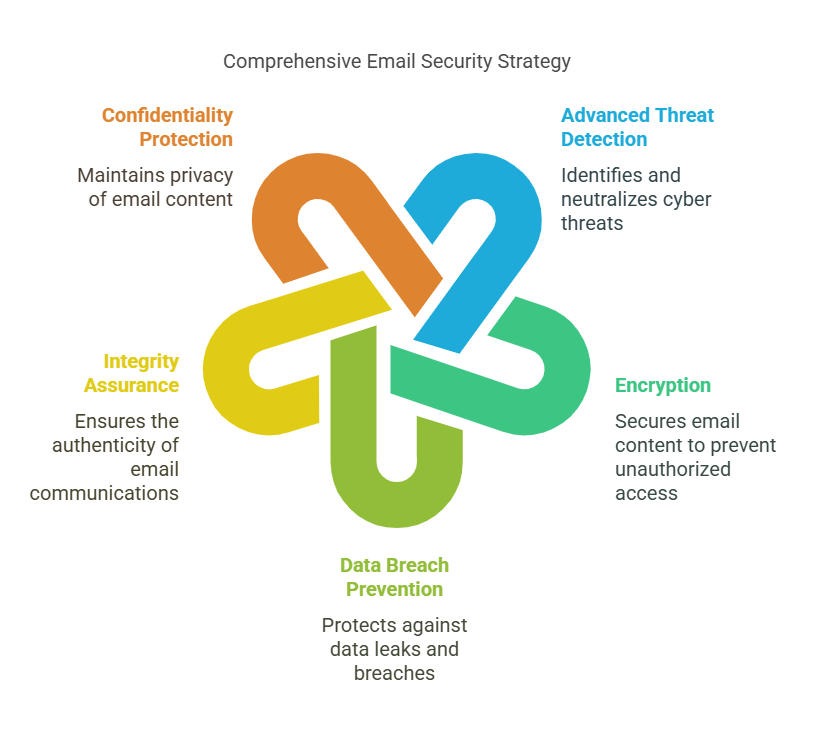
    This type of security service is designed to offer a multifaceted protection strategy, encompassing everything from advanced threat detection to encryption, in order to combat the sophisticated tactics employed by cybercriminals. Recognizing the dire consequences of data breaches, businesses are now prioritizing the integration of these services to ensure the integrity and confidentiality of their email communications.

    Understanding the Essentials of Email Security Services

    Email Security Service Your Ultimate Guide to Protection

    At its core, an email security service is engineered to protect against a wide range of cyber threats, including the perilous act of data exfiltration. Through a combination of cutting-edge technologies and strategic protocols, these services strive to fortify email systems against unauthorized access and misuse.

    The Increasing Importance of Email Security Solutions

    As the digital landscape becomes increasingly perilous, the importance of email security solutions cannot be overstated. With email being a primary vector for cyberattacks, businesses and individuals alike are facing heightened risks of data breaches, identity theft, and financial loss. In response, the demand for comprehensive email security solutions that can effectively thwart these risks has skyrocketed, highlighting the crucial role these defenses play in today’s cybersecurity ecosystem.

    Key Features That Define Top-Notch Email Security

    Advanced Threat Prevention Techniques

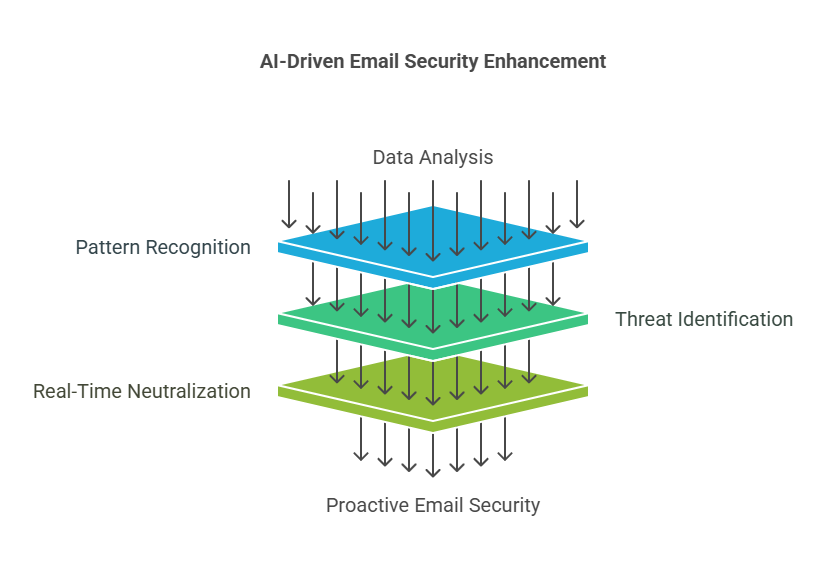
    Top-tier email security encompasses advanced threat prevention techniques, leveraging AI-powered protection to offer real-time threat detection. This approach allows for the identification and neutralization of advanced threats before they can infiltrate the network, underscoring the pivotal role of innovative technology in contemporary cybersecurity measures.

    Email Encryption: A Non-Negotiable for Data Protection

    Email encryption stands as a cornerstone of data security, ensuring that sensitive information remains inaccessible to unauthorized parties. In conjunction with security policies and content filtering, encryption addresses the stringent regulatory requirements governing data protection, thereby playing a crucial role in the defense against data breaches and cyber espionage.

    Comprehensive Phishing and Malware Defense

    The relentless rise in phishing emails and malware necessitates a comprehensive defense strategy, integrating sophisticated malware detection systems to scrutinize incoming messages for malicious intent. By effectively identifying and blocking these threats, businesses can significantly reduce their vulnerability to cyberattacks, safeguarding their assets and reputation.

    Incident Response: Preparing for When Things Go Wrong

    Despite the most robust defenses, incidents can occur, making a well-prepared incident response plan an indispensable component of email security. This plan ensures that, in the event of a breach, measures are promptly taken to mitigate damage, assess system vulnerabilities, and restore normal operations, thereby minimizing the impact on the organization.

    Comprehensive Solutions for Email Threat Prevention

    Addressing the multifaceted nature of email threats requires a comprehensive solution that integrates advanced threats detection, AI-powered protection, and real-time threat detection. This holistic approach is critical for organizations aiming to maintain a secure and resilient email ecosystem amidst the evolving cyber threat landscape.

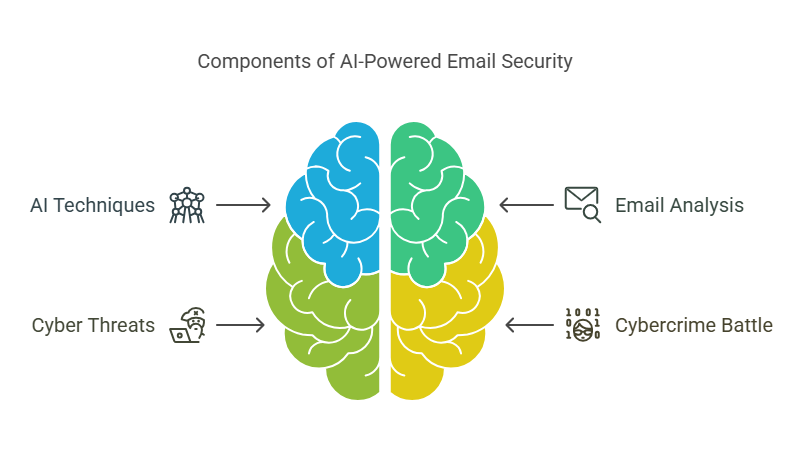
    AI-Powered Email Security Services: Beyond Traditional Defenses

    AI Powered Email Security Services

    AI-powered services offer a significant advancement over traditional defenses, employing sophisticated email analysis techniques powered by artificial intelligence. These systems are adept at identifying and neutralizing even the most cunning cyber threats, representing a quantum leap forward in the ongoing battle against cybercrime.

    The Role of Secure Email Gateways in Modern Cybersecurity

    Secure email gateways serve as a critical bulwark in modern cybersecurity strategies, filtering incoming email traffic to remove spam, malicious content, and other undesired communications. By scrutinizing every message that enters the network, these gateways play a pivotal role in maintaining the integrity and security of email communications.

    Cloud-Based vs. AI-Enhanced Email Security: A Comparative Overview

    In the realm of email security, both cloud-based and AI-enhanced solutions offer distinct advantages in combating malicious messages. The choice between them hinges on specific organizational needs, including scalability, real-time defense capabilities, and the sophistication of threats faced.

    The Flexibility and Scalability of Cloud-Based Solutions

    Cloud-based email security solutions are celebrated for their flexibility and scalability, accommodating the dynamic needs of email systems amid evolving threats. These solutions not only provide robust defense against email-based attacks but also ensure that security measures grow in tandem with the organization.

    The Advanced BEC Defense Offered by AI-Enhanced Services

    AI-enhanced email security services excel in defending against Business Email Compromise (BEC) attacks, utilizing cutting-edge technology to identify and neutralize sophisticated schemes. By analyzing communication patterns and identifying anomalies, these services offer an unparalleled level of protection against one of the most insidious threats in today’s cybersecurity landscape.

    Navigating Through Types of Email Security Services

    In the diverse ecosystem of email security services, organizations are confronted with a range of options designed to mitigate potentially malicious activities and protect against malicious emails. Understanding the nuances of these services is essential for selecting the solution that best aligns with specific security requirements and threat landscapes.

    From Secure Email Gateways to API-Based Protection

    The transition from traditional secure email gateways to API-based protection represents a significant evolution in the fight against cyber threats. Secure email gateways have long been the bulwark against spam filtering and malicious content, diligently monitoring email traffic to safeguard users. However, API-based protection has emerged as a more dynamic solution, offering real-time, automated defenses that adapt to the constantly evolving landscape of email-based threats. This approach not only enhances the ability to detect sophisticated phishing attempts but also ensures a more granular control over email security, catering to the specific needs of modern organizations.

    Email Data Protection (EDP) and Its Significance

    Email Data Protection

    Email Data Protection (EDP) is critical in today’s digital age, where data breaches are increasingly common. EDP safeguards sensitive information by enforcing security policies, content filtering, and meeting regulatory requirements. This ensures that an organization’s email communications are secure, protecting against data leaks and unauthorized access. Furthermore, EDP plays a pivotal role in maintaining data security, crucial for compliance and preserving client trust. By implementing EDP, businesses can significantly mitigate the risk of data exposure and enhance their overall security posture.

    The Evolution and Impact of Email Encryption Services

    Email encryption services have undergone significant evolution, transforming from simple, optional tools into essential components of email security strategies. This evolution reflects the growing awareness of the risks associated with unsecured email communications. Today, email encryption not only secures the contents of an email but also verifies the identity of the sender, ensuring that sensitive information remains confidential and tamper-proof during transit. The impact of these services has been profound, significantly reducing the incidence of data breaches and enhancing privacy in digital communications.

    Why API-Based Email Security Solutions Stand Out

    API-based email security solutions stand out for their flexibility and ability to seamlessly integrate with existing email infrastructures. Unlike traditional methods that act as external barriers, API-based solutions work from within, offering a more nuanced approach to detecting suspicious emails and phishing attempts. This allows for real-time scanning of email content, providing immediate protection without the latency associated with traditional security measures. The direct integration with existing email systems enables a more comprehensive and effective defense mechanism, setting API-based solutions apart in the realm of email security.

    Deployment and Integration: Making the Right Choice

    Choosing the right deployment and integration strategy for an email security solution is paramount. It requires a delicate balance between robust security measures, such as advanced email security and real-time scanning, and the need to meet compliance requirements. The right solution must seamlessly mesh with existing email systems, ensuring that phishing attempts and suspicious emails are intercepted without disrupting the flow of legitimate communications. This balance is crucial for maintaining an optimal level of security while also ensuring the smooth operation of business communications.

    Evaluating Your Email Security Service Deployment Options

    When evaluating email security service deployment options, organizations must consider the nature of their email traffic and the specific threats they face. The decision between on-premises, cloud-based, or hybrid solutions depends on various factors, including the need for scalability, control over data sovereignty, and the ability to protect against advanced email security threats. Each option presents its own set of advantages and challenges, making it essential for businesses to assess their unique requirements and security goals before making a decision. This careful evaluation ensures that the chosen solution aligns with the organization’s overall cybersecurity strategy.

    Ensuring Seamless Integration With Your Existing Tech Stack

    Seamless integration with the existing tech stack is crucial when implementing a new email security solution. Security vendors play a pivotal role in this process, offering tools and services designed to complement and enhance existing systems. The goal is to create a cohesive security environment where new and existing solutions work in harmony, minimizing compatibility issues and ensuring efficient operation. This not only streamlines the security management process but also maximizes the effectiveness of the overall cybersecurity framework, safeguarding against emerging threats without adding undue complexity.

    Reviewing Compliance Requirements: A Critical Step

    Reviewing compliance requirements is a critical step in selecting an email security solution. Every industry faces unique regulatory demands, from healthcare’s HIPAA to the financial sector’s GLBA. A comprehensive email service must not only protect against cyber threats but also ensure that all communications comply with these stringent requirements. Failure to do so can result in severe penalties and loss of reputation. Therefore, businesses must diligently assess their compliance needs and choose solutions that offer robust security while adhering to relevant regulations.

    Assessing the Resources Needed for Optimal Operation

    Assessing the resources needed for the optimal operation of an email security system is vital for its success. This includes evaluating the human, technological, and financial resources required to maintain and manage the system effectively. Organizations must consider the expertise of their security teams, the compatibility of the new system with existing infrastructure, and the budgetary constraints that may impact the choice of solution. A thorough assessment ensures that the selected email security service not only meets the organization’s security needs but is also sustainable and effective in the long term.

    Selecting the Right Email Security Service for Your Needs

    Selecting the right email security service requires a nuanced understanding of the organization’s specific needs and challenges. This involves considering factors such as the volume and nature of existing email traffic, the sophistication of potential phishing attempts, and the need for advanced email security features like real-time scanning. A tailored approach ensures that the chosen solution effectively addresses the unique threats faced by the organization, providing comprehensive protection against suspicious emails and other cyber threats without compromising the efficiency of email communications.

    Keys to Choosing an Effective Email Security Solution

    Choosing an effective email security solution hinges on several key factors. These include the ability to detect and neutralize phishing attempts, the integration capabilities with existing email systems, and the provision of real-time scanning for suspicious emails. Additionally, the solution should offer advanced email security features that can adapt to evolving cyber threats. Organizations must carefully evaluate these criteria to ensure that their chosen email security solution not only meets their current security needs but is also scalable for future requirements.

    Discovering the Right Email Security Plan for Your Industry

    Discovering the right email security plan requires an in-depth understanding of the specific threats and regulatory requirements pertinent to one’s industry. This involves a careful assessment of the types of cyber threats most commonly faced, such as phishing attacks or advanced malware, and the level of data protection required by industry standards. By aligning the email security solution with these industry-specific needs, organizations can ensure robust protection against targeted attacks, safeguarding their sensitive data and maintaining compliance with regulatory mandates.

    Frequently Asked Questions About Email Security Services

    Frequently asked questions about email security services often revolve around their ability to offer comprehensive protection against a wide range of cyber attacks. Queries may include the effectiveness of AI-powered email security in preventing email-borne attacks, the role of managed XDR in enhancing protection, and how security awareness training can bolster defenses. Additionally, questions may delve into the capabilities of advanced algorithms and malware protection in identifying and neutralizing threats. Addressing these questions helps demystify the complex landscape of email security, guiding organizations in their quest for robust cybersecurity solutions.

    The Definitive Guide to Understanding Advanced Email Protection

    Understanding advanced email protection involves grasping the nuances of combating cyber threats through sophisticated means such as advanced threat protection and email threat protection solutions. These technologies are designed to identify and mitigate not only known threats but also unknown threats that conventional security measures may overlook. A comprehensive protection solution integrates these advanced mechanisms to provide a robust defense against the ever-evolving landscape of cyber threats, ensuring the security of digital communications.

    How AI and Machine Learning Are Revolutionizing Email Security

    AI and Machine Learning Are Revolutionizing Email Security

    AI and machine learning are revolutionizing email security by enhancing anti-phishing capabilities, allowing for the identification and neutralization of threats in real-time. These technologies learn from vast quantities of data to recognize patterns associated with phishing attempts and other malicious activities. By continuously adapting to new threats, AI and machine learning ensure that email security systems remain at the forefront of cyber defense, providing dynamic, proactive protection against the sophisticated tactics employed by cybercriminals.

    The Importance of Advanced BEC Defense in Today’s Cyber Landscape

    In the digital age, the sophistication of cyber threats, particularly Business Email Compromise (BEC), has elevated the need for advanced defense mechanisms. BEC attacks, which often involve the impersonation of executives or trusted partners, can lead to significant financial losses and data breaches. The complexity of these schemes means traditional security measures are often insufficient, necessitating a shift towards more nuanced and intelligent solutions capable of identifying and mitigating such targeted threats before they can cause harm.

    Crafting a Definitive Email Cybersecurity Strategy Guide

    Developing a robust email cybersecurity strategy is imperative for organizations to protect themselves against an ever-evolving threat landscape. This strategy should encompass a comprehensive approach, including the deployment of cutting-edge technologies for detecting phishing, implementing stringent access controls, and educating employees on the importance of cybersecurity hygiene. By adopting a multi-layered defense mechanism, organizations can significantly reduce their vulnerability to malicious attacks, ensuring the integrity and confidentiality of their email communications.

    Essential Steps to Fortify Your Email Security Posture

    Strengthening your email security posture involves a series of critical steps, beginning with a thorough assessment of current vulnerabilities and potential cyber threats. This process includes the adoption of advanced anti-phishing tools and regular security audits to identify and rectify weaknesses in the system. Additionally, implementing robust data protection policies and ensuring that all users are aware of best practices for email security can dramatically reduce the risk of malware attacks and other cyber threats, safeguarding sensitive information from unauthorized access.

    Best Practices for Preventing Email Attacks and Ensuring Data Security

    To mitigate the risk of email attacks and enhance data security, organizations should adopt a set of best practices that include the use of advanced anti-phishing solutions and the implementation of strong password policies. Regular training sessions for employees on recognizing and responding to phishing attempts are crucial. Furthermore, the integration of end-to-end encryption for email communications ensures that data remains protected, both in transit and at rest, significantly reducing the likelihood of unauthorized access and ensuring compliance with data protection regulations.

    Conclusion: Elevating Your Email Security With Confidence

    In conclusion, navigating the complex landscape of email security requires a proactive and comprehensive approach. By embracing advanced email security solutions, organizations can protect themselves against email-based threats and targeted attacks. Leveraging the insights from the Forrester Wave on endpoint protection and adopting strategies for detecting phishing, businesses can build a resilient cybersecurity posture that adapts to the evolving nature of threats, ensuring the confidentiality, integrity, and availability of their email communications.

    The Path Forward: Embracing Advanced Email Security Solutions

    The path forward for organizations looking to bolster their defense against sophisticated email threats involves embracing advanced email security solutions. By integrating cutting-edge technologies such as AI and machine learning for detecting phishing and sophisticated threats, businesses can stay ahead of attackers. The adoption of solutions offering impersonation protection and advanced BEC defense is critical. Additionally, the use of cybersecurity platforms that minimize false positives and efficiently scan QR codes for malicious content can significantly enhance an organization’s cybersecurity posture, ensuring robust protection against a wide array of email-based threats.

    Ensuring Peace of Mind in an Era of Sophisticated Email Threats

    At a time that is dominated by sophisticated threats, achieving peace of mind requires a fortified cybersecurity posture that encompasses advanced solutions for protecting against BEC attacks, impersonation, and other email-based threats. The cornerstone of this defense is the deployment of a comprehensive cybersecurity platform that not only defends against sophisticated threats but also enhances the organization’s ability to reduce false positives, ensuring that legitimate communications are not hindered. Through continuous improvement and adoption of cutting-edge technologies, businesses can safeguard their operations from the ever-present risk of cyber attacks, ensuring operational resilience and trustworthiness.

    Our mail, messaging and email security providers are listed here.

    Contact Us For More Information