Category: Dell

  • Dell’s Game-Changing AI Factory: The Hybrid Solution Enterprise IT Has Been Waiting For

    Dell’s Game-Changing AI Factory: The Hybrid Solution Enterprise IT Has Been Waiting For

    Unleashing Enterprise AI: How Dell’s Hybrid Approach is Changing the Game

    In today’s rapidly evolving AI landscape, organizations face a critical challenge: how to implement powerful AI capabilities while maintaining control, security, and flexibility. Dell’s innovative approach to this challenge is turning heads in the enterprise space, particularly with their new Granite family of hybrid AI models and the comprehensive Dell AI Factory platform.

    The Power of Hybrid AI: Breaking Down Barriers 

    Traditional AI implementations often force organizations to choose between open-source flexibility and proprietary performance. Dell’s hybrid approach eliminates this false dichotomy. The Granite family of AI models combines the best of both worlds, offering enterprises the freedom to leverage both open-source and proprietary models within a unified framework.

    Why This Matters for Enterprise IT

    • Reduced Complexity: Organizations can manage diverse AI workloads through a single, integrated platform
    • Faster Implementation: The Dell AI Factory accelerates time-to-value for AI initiatives
    • Greater Control: Teams maintain full oversight of their AI deployments and data

    Security and Governance at the Core 

    In an era where data privacy and compliance are paramount, Dell’s approach stands out for its enterprise-grade security features. The AI Factory platform ensures organizations can:

    • Train and deploy models while maintaining strict data governance
    • Keep sensitive information within trusted environments
    • Maintain comprehensive audit trails and model transparency
    • Meet regulatory requirements across different industries

    Flexibility That Drives Innovation

    The Dell AI Factory’s architecture supports multiple deployment options – from on-premises to edge computing – while accommodating various data types including text, images, and code. This flexibility enables organizations to:

    • Customize AI solutions to specific business needs
    • Avoid vendor lock-in
    • Rapidly adapt to changing requirements
    • Scale AI initiatives across the enterprise

    Democratizing AI Access

    Perhaps most importantly, Dell’s solution breaks down traditional barriers to AI adoption. The platform’s intuitive design and integrated tools help bridge the gap between data scientists, IT teams, and business users, making enterprise AI more accessible than ever.

    The Path Forward

    For organizations looking to accelerate their AI initiatives while maintaining control and security, Dell’s hybrid approach offers a compelling solution. The Dell AI Factory and Granite models provide the foundation for sustainable, enterprise-wide AI adoption.

    Ready to transform your organization’s AI capabilities? Schedule a demo to see how Dell’s AI solutions can power your innovation journey. 🚀


    Interested in learning more about enterprise AI solutions? Contact our team to explore how Dell’s AI Factory can accelerate your organization’s digital transformation.


    Contact Us Now

  • Dell’s AI Platform Upgrade: A Game-Changer for Enterprise Security and Scale

    Dell’s AI Platform Upgrade: A Game-Changer for Enterprise Security and Scale

    Dell’s AI Data Platform Gets Supercharged: What IT Leaders Need to Know

    The artificial intelligence landscape is evolving rapidly, and enterprise IT teams face mounting pressure to deliver secure, scalable AI capabilities. Dell is meeting this challenge head-on with significant enhancements to their AI Data Platform, forging strategic partnerships with Nvidia and Elastic to create a more powerful and integrated foundation for enterprise AI workloads.

    Why This Matters for Enterprise IT 🎯

    Organizations implementing AI at scale often struggle with a common set of challenges: fragmented data infrastructure, complex deployment processes, and security concerns. These hurdles can significantly slow down AI initiatives and increase operational risks. The enhanced Dell AI Data Platform directly addresses these pain points by providing:

    • Unified data management across traditional and generative AI applications
    • Streamlined deployment and operational workflows
    • Enterprise-grade security controls built into the foundation
    • Scalable architecture that grows with organizational needs

    The Power of Strategic Integration 💪

    Dell’s collaboration with industry leaders brings together best-in-class capabilities: Elastic’s powerful search and analytics engine combines with Nvidia’s hardware acceleration to create a comprehensive solution. This integration means IT teams can:

    • Consolidate disparate data sources into a single, manageable ecosystem
    • Accelerate data preparation and model deployment
    • Maintain strict security and compliance standards
    • Optimize infrastructure utilization and costs

    Security-First Design 🔒

    For organizations in highly regulated industries, the platform’s security capabilities are particularly noteworthy. Dell’s AI Data Platform incorporates robust data protection controls and governance features that help ensure:

    • Consistent security policies across AI workloads
    • Comprehensive audit trails and compliance reporting
    • Protected data pipelines for sensitive information
    • Secure model training and deployment environments

    Real-World Impact

    The enhanced platform significantly reduces the complexity of enterprise AI deployment while maintaining the security and scalability that IT leaders demand. Organizations can now focus on driving innovation rather than managing infrastructure, with the confidence that their AI initiatives are built on a secure, enterprise-ready foundation.

    Ready to transform your organization’s AI capabilities? Contact us today to learn how Dell’s AI Data Platform can accelerate your journey while maintaining enterprise-grade security and scalability. 🚀


    Contact Us Now

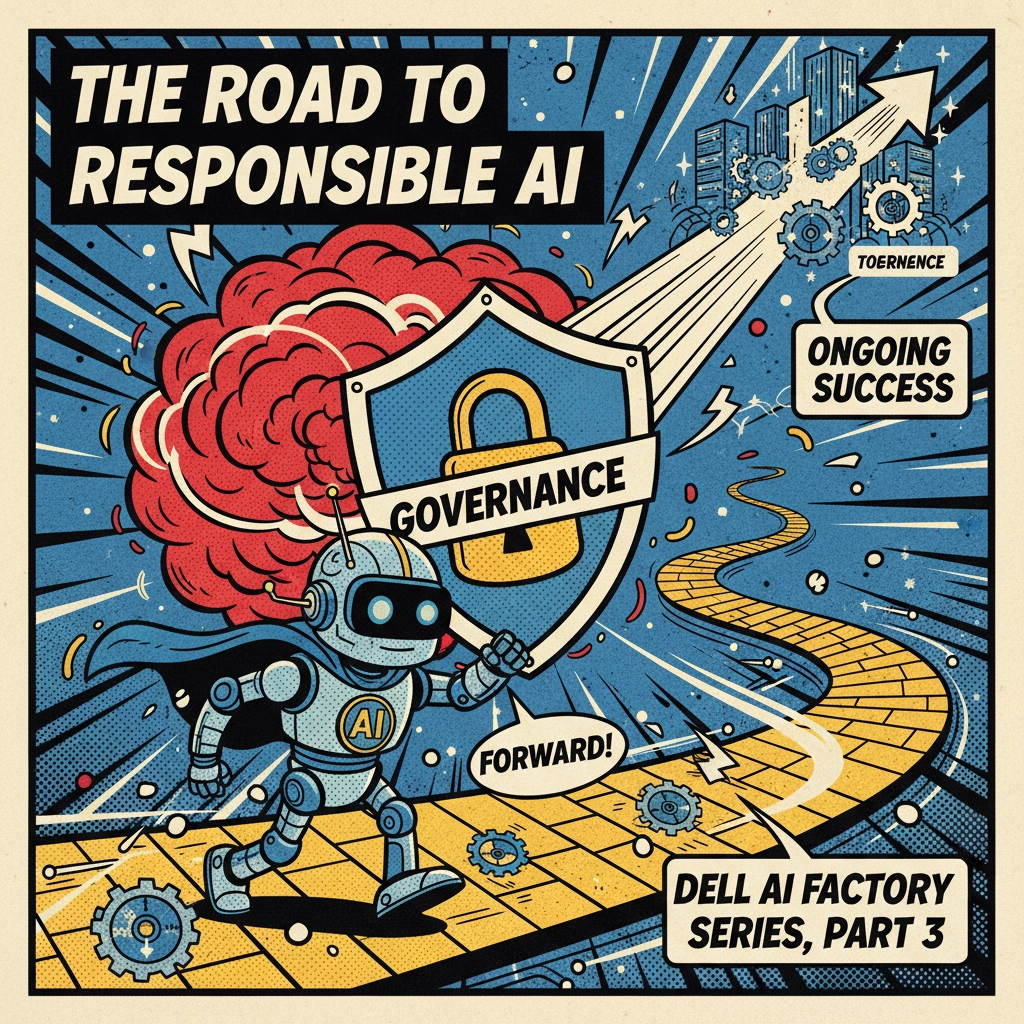
  • The Road to Responsible AI: Governance, Security & Ongoing Success (Dell AI Factory Series, Part 3)

    The Road to Responsible AI: Governance, Security & Ongoing Success (Dell AI Factory Series, Part 3)

    The final chapter in successful AI implementation extends far beyond initial deployment. Organizations across government, healthcare, education, and enterprise sectors require comprehensive governance frameworks, robust security protocols, and sustainable management strategies to ensure their AI investments deliver long-term value while maintaining compliance and ethical standards.

    This concluding entry in our Dell AI Factory series examines the critical elements that separate successful AI implementations from costly technological experiments that fail to achieve organizational objectives.

    Establishing Comprehensive AI Governance Frameworks

    Effective AI governance begins with clearly defined policies that address data management, model development, deployment protocols, and ongoing monitoring requirements. Organizations implementing Dell AI servers must establish governance structures that align with their specific regulatory environment while maintaining the flexibility needed for technological evolution.

    image_1

    The Dell AI Factory approach provides the foundational infrastructure necessary for robust governance implementation. Dell PowerEdge servers offer the computational reliability required for consistent AI model performance, while Dell storage solutions ensure data integrity throughout the AI lifecycle. These components work together to create an environment where governance policies can be effectively implemented and maintained.

    Modern AI governance frameworks must address several critical areas:

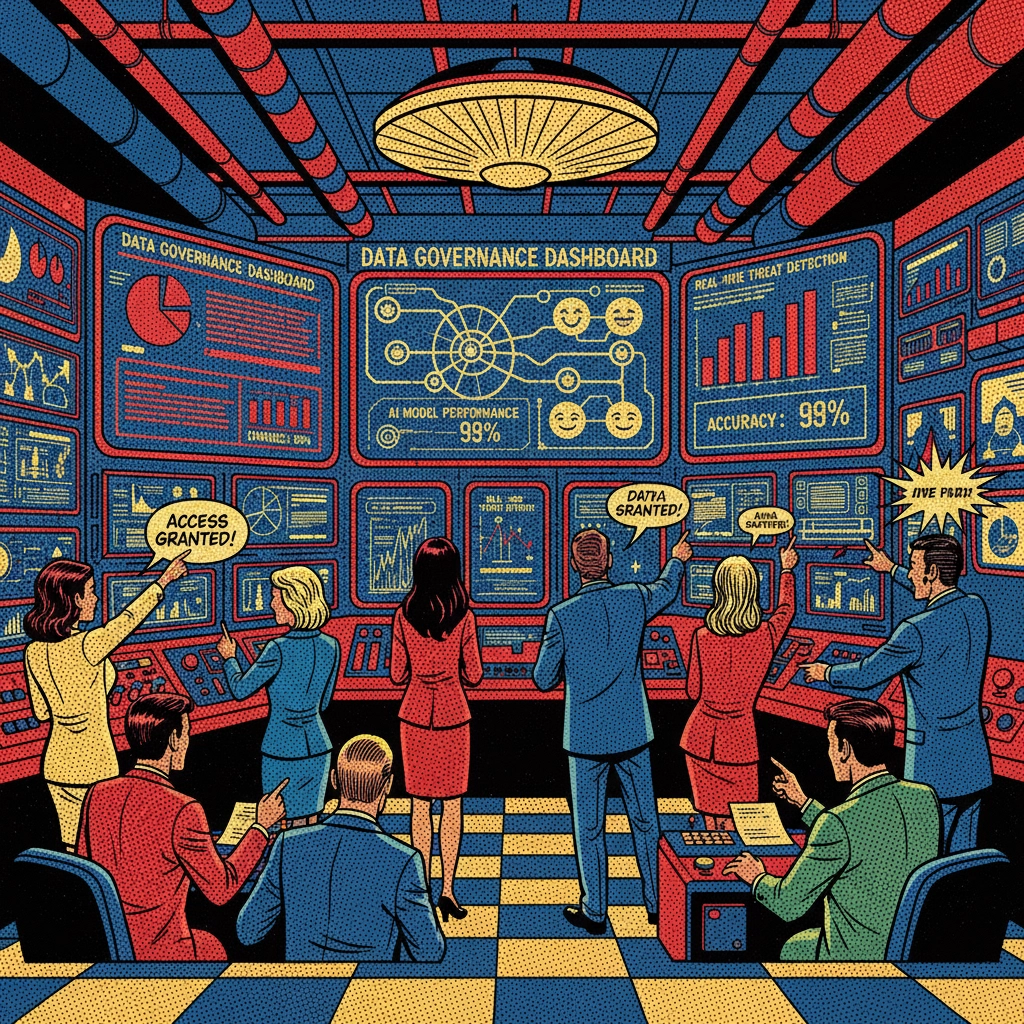
    Data Governance and Lineage: Organizations need complete visibility into data sources, processing methods, and model training datasets. Dell storage systems provide the architecture necessary for maintaining detailed data lineage records while ensuring secure access controls.

    Model Development Standards: Establishing consistent development practices ensures AI models meet organizational quality and ethical standards. Dell NVIDIA partnerships deliver the computing power necessary for thorough model testing and validation processes.

    Deployment Authorization: Clear approval processes for AI model deployment prevent unauthorized or inadequately tested systems from entering production environments. Dell AI servers provide the infrastructure reliability necessary for controlled deployment procedures.

    Performance Monitoring: Continuous monitoring of AI system performance, bias detection, and outcome evaluation requires robust infrastructure capable of processing large volumes of operational data. The Dell AI Factory ecosystem delivers this monitoring capability through integrated hardware and software solutions.

    Implementing Multi-Layered Security Architecture

    Security considerations for AI implementation extend beyond traditional cybersecurity measures to encompass model protection, data privacy, and intellectual property safeguarding. Organizations deploying Dell AI servers must implement comprehensive security strategies that protect against both external threats and internal vulnerabilities.

    The Dell AI Factory security approach encompasses hardware-level protection, network security, data encryption, and access control mechanisms. Dell PowerEdge servers incorporate built-in security features that provide foundational protection for AI workloads, while Dell NVIDIA solutions offer specialized security capabilities for AI model protection.

    Physical Security Measures: AI infrastructure requires protection against physical tampering and unauthorized access. Dell servers include tamper detection and secure boot capabilities that ensure system integrity from the hardware level upward.

    Network Security Integration: AI systems generate substantial network traffic during training and inference operations. Proper network segmentation and monitoring ensure AI workloads remain isolated from other organizational systems while maintaining necessary connectivity for operational requirements.

    Data Protection Protocols: AI implementations process sensitive organizational data that requires encryption both at rest and in transit. Dell storage solutions provide comprehensive encryption capabilities that protect data throughout the AI processing pipeline.

    Access Control and Authentication: Limiting access to AI systems and data requires robust identity management and authentication systems. Organizations must implement role-based access controls that ensure only authorized personnel can modify AI models or access sensitive data.

    image_2

    Optimizing Long-Term AI Performance and ROI

    Sustaining AI effectiveness requires continuous optimization of both infrastructure performance and model accuracy. Organizations utilizing Dell AI Factory components must implement systematic approaches to performance monitoring, capacity planning, and system optimization that ensure continued return on investment.

    Dell AI servers provide the computational foundation necessary for ongoing optimization activities. Regular performance analysis, capacity utilization monitoring, and predictive maintenance ensure AI infrastructure continues operating at peak efficiency throughout its operational lifecycle.

    Performance Benchmarking: Establishing baseline performance metrics enables organizations to track AI system effectiveness over time. Dell PowerEdge servers provide consistent computational performance that enables accurate benchmarking and trend analysis.

    Scalability Planning: AI workloads often experience significant growth in computational requirements as models become more sophisticated and data volumes increase. Dell storage and compute solutions offer the scalability necessary to accommodate growing AI demands without requiring complete infrastructure replacement.

    Resource Optimization: Maximizing utilization of AI infrastructure requires careful workload scheduling and resource allocation. The Dell AI Factory approach provides management tools necessary for optimizing resource utilization across multiple AI projects and organizational departments.

    Technology Refresh Planning: AI infrastructure requires periodic updates to maintain compatibility with evolving AI frameworks and increasing performance requirements. Dell NVIDIA partnerships ensure access to latest AI acceleration technologies while maintaining compatibility with existing infrastructure investments.

    Managing AI Ethics and Compliance Requirements

    Responsible AI deployment requires ongoing attention to ethical considerations and regulatory compliance requirements. Organizations across government, healthcare, and education sectors face unique compliance challenges that require specialized approaches to AI governance and management.

    The Dell AI Factory framework provides the infrastructure foundation necessary for implementing comprehensive compliance monitoring and reporting capabilities. Dell servers offer the computational resources required for bias detection algorithms, while Dell storage systems maintain the detailed audit trails necessary for regulatory reporting.

    Bias Detection and Mitigation: AI models can develop biases that affect decision-making accuracy and fairness. Regular bias testing requires substantial computational resources and comprehensive data analysis capabilities that Dell AI servers provide.

    Audit Trail Maintenance: Regulatory compliance often requires detailed records of AI decision-making processes, model training data, and performance metrics. Dell storage solutions offer the capacity and reliability necessary for maintaining comprehensive audit documentation.

    Ethical Review Processes: Regular ethical review of AI applications ensures continued alignment with organizational values and societal expectations. These review processes require access to detailed performance data and model behavior analysis that Dell infrastructure supports.

    Regulatory Adaptation: Evolving AI regulations require organizations to adapt their compliance approaches while maintaining operational continuity. The flexibility of Dell AI Factory components enables organizations to implement new compliance requirements without disrupting existing AI operations.

    image_3

    Continuous Improvement and Innovation Integration

    Successful long-term AI implementation requires systematic approaches to incorporating technological advances, improving model performance, and expanding AI capabilities throughout the organization. Dell AI Factory provides the foundation necessary for continuous innovation while maintaining operational stability.

    Organizations must balance the benefits of adopting new AI technologies with the risks of disrupting existing successful implementations. Dell PowerEdge servers and Dell storage solutions offer the reliability and flexibility necessary for implementing gradual improvements without compromising operational continuity.

    Technology Integration Planning: New AI frameworks, libraries, and methodologies emerge regularly, requiring careful evaluation and integration planning. Dell NVIDIA partnerships provide early access to cutting-edge AI acceleration technologies while ensuring compatibility with existing infrastructure.

    Performance Enhancement Strategies: Ongoing optimization of AI models and infrastructure requires systematic approaches to identifying improvement opportunities and implementing enhancements. The Dell AI Factory ecosystem provides monitoring and analysis tools necessary for continuous performance improvement.

    Knowledge Transfer and Training: Maintaining organizational AI capabilities requires ongoing staff development and knowledge transfer processes. Organizations must invest in training programs that keep technical staff current with evolving AI technologies and best practices.

    Innovation Partnership Development: Successful AI implementation often benefits from partnerships with technology vendors, research institutions, and other organizations. Dell’s extensive partner ecosystem provides access to specialized expertise and emerging technologies that enhance AI capabilities.

    Strategic Partnership and Expert Guidance

    The complexity of responsible AI implementation requires organizations to work with experienced partners who understand both the technical requirements and the broader strategic implications of AI deployment. Successful AI implementations combine robust infrastructure with expert guidance that ensures projects achieve their intended objectives.

    Organizations implementing Dell AI Factory solutions benefit from working with partners who possess deep expertise in AI infrastructure deployment, governance framework development, and ongoing optimization strategies. This partnership approach ensures AI investments deliver sustained value while meeting compliance and ethical requirements.

    The journey toward responsible AI implementation requires careful attention to governance, security, and long-term sustainability considerations. Organizations that invest in comprehensive frameworks, robust infrastructure, and expert partnerships position themselves for continued success in an rapidly evolving technological landscape. Through strategic implementation of Dell AI Factory solutions and ongoing attention to best practices, organizations can harness AI’s transformative potential while maintaining the responsibility and oversight necessary for sustainable success.

  • Unlocking the Value of Data for AI: The 7 Essential Steps (Dell AI Factory Series, Part 2)

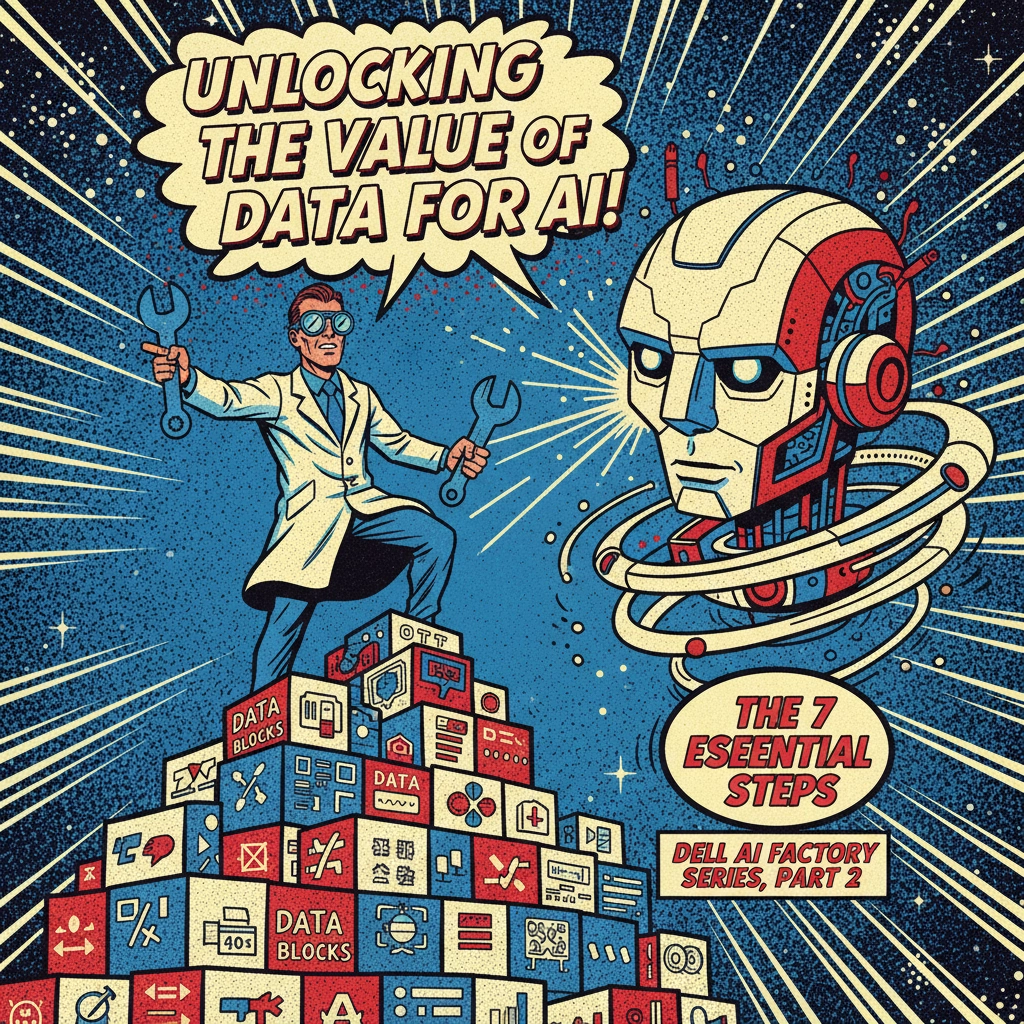
    Unlocking the Value of Data for AI: The 7 Essential Steps (Dell AI Factory Series, Part 2)

    In the first part of this series, we explored why effective data management serves as the foundation for successful AI implementation across organizations. Now, we dive into the practical framework that transforms data from a scattered resource into a strategic asset: Dell’s seven-step methodology for unlocking data value in AI initiatives.

    This comprehensive framework, developed through extensive workshops and consultations by Dell’s expert data scientists with diverse organizations, addresses the most common challenges faced during AI implementation while providing proven strategies for creating scalable and effective AI models. Whether your organization operates in government, healthcare, education, or private sector environments, these steps provide a clear roadmap for transitioning from AI experimentation to transformational data utilization.

    The Seven-Step Framework for AI Data Management

    Step 1: Identify the Business Need

    The foundation of any successful AI implementation begins with clearly identifying the business need and aligning data efforts with strategic organizational objectives. Without well-defined goals and measurable metrics, achieving meaningful value from AI initiatives becomes unlikely.

    This initial step requires organizations to understand their operational objectives and the specific value that AI will unlock. Success demands alignment across departments and leadership teams on desired outcomes and how progress will be measured. Organizations must establish a clear vision of the value creation process, ensuring that all subsequent data management efforts remain purposeful and directed toward achievable objectives.

    For government agencies, this might involve improving citizen services or operational efficiency. Healthcare organizations may focus on patient outcomes or diagnostic accuracy. Educational institutions often prioritize student success metrics or administrative streamlining. Regardless of sector, this foundational clarity prevents costly diversions and ensures resources align with mission-critical priorities.
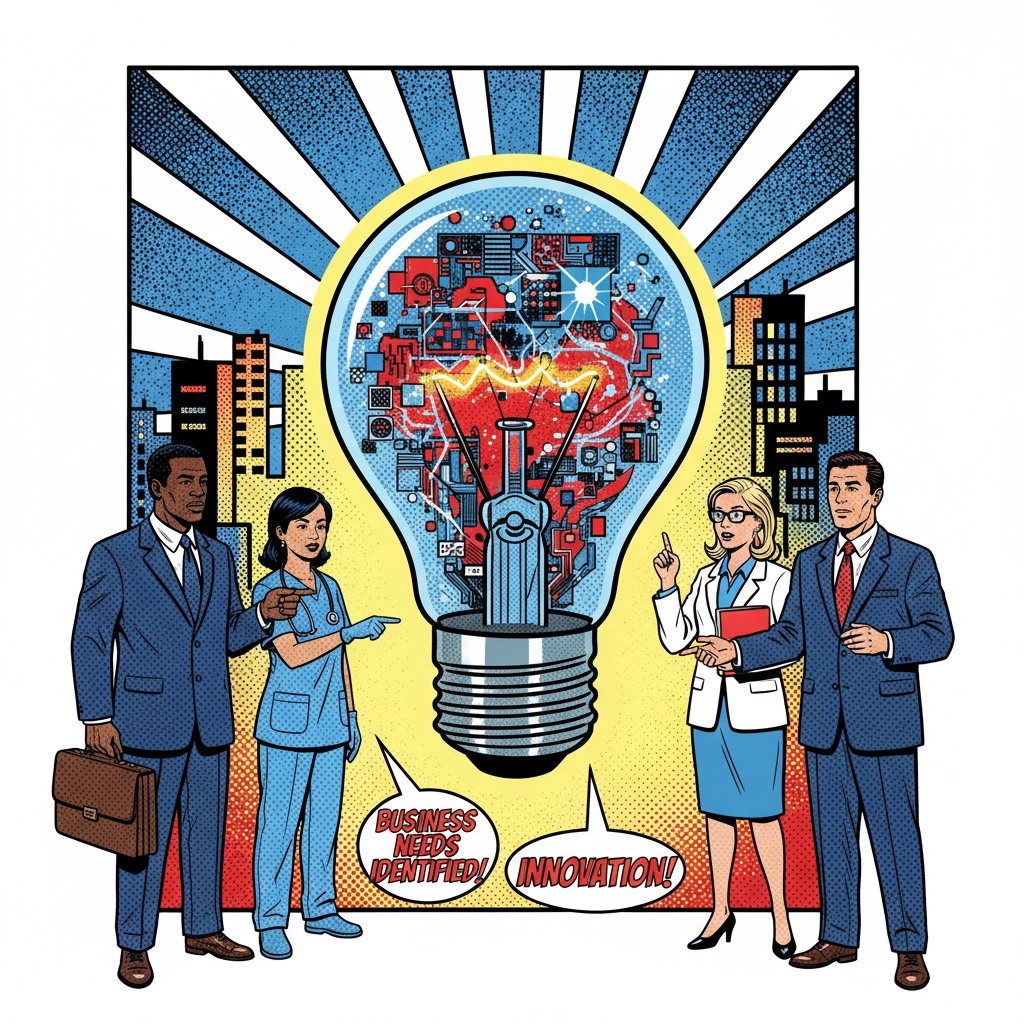
    image_1

    Step 2: Accelerate Relevant Data Discovery

    With a clear roadmap established, organizations can accelerate the discovery of data relevant to their specific objectives. This step recognizes a crucial principle: not all available data contributes to solving the identified problem, and data science teams must efficiently identify pertinent information.

    The process involves establishing clear connections between data sources and their potential value through comprehensive cataloging and metadata creation. This focused approach ensures efficiency in data efforts, saving time and resources by pinpointing relevant datasets swiftly rather than attempting to process every available data source.

    Modern Dell storage solutions play a crucial role here, providing the infrastructure necessary to catalog, search, and access distributed data sources efficiently. Organizations leveraging Dell PowerEdge servers with integrated AI capabilities can process discovery tasks more rapidly, reducing the time from data identification to actionable insights.

    Step 3: Simplify Data Exploration and Access

    Once relevant data sources are identified, organizations must ensure that data science teams can easily access and explore these resources. This step focuses on removing barriers that prevent efficient data analysis and experimentation.

    Data exploration requires robust infrastructure capable of handling various data types, formats, and volumes. Dell AI servers provide the computational power necessary for complex data exploration tasks, while Dell storage solutions ensure that data remains accessible without performance bottlenecks.

    Simplification also involves standardizing data access protocols, implementing consistent security measures, and providing intuitive interfaces for data scientists and analysts. Organizations should consider implementing data virtualization technologies that present unified views of distributed data sources, reducing complexity for end users.

    image_2

    Step 4: Optimize Analytics, ML Experimentation, and Modeling

    This step encourages continuous experimentation and modeling to identify variables capable of solving identified business problems. Organizations should embrace iterative approaches that test multiple hypotheses and refine models based on results.

    Synthetic data creation becomes particularly valuable here, especially when organizations face data quality or privacy challenges. This approach helps expedite AI development, particularly during initial phases when organizations are establishing their AI capabilities.

    Leveraging pre-trained foundational models that require only augmentation and fine-tuning provides an excellent starting point for many AI initiatives. Rather than building models from scratch, organizations can adapt existing frameworks to their specific needs, reducing development time and resource requirements.

    Dell NVIDIA partnerships provide access to optimized hardware and software combinations specifically designed for machine learning workloads. These solutions support multiple iterations and algorithms, enabling teams to uncover key data variables more efficiently while enhancing the effectiveness of generative AI applications.

    A platform approach that supports easy data access enables teams to optimize analytics through iterative testing and refinement, crucial for developing robust AI models that deliver consistent results.

    Step 5: Scale Data and Analytics Productization

    The transition from data science project to reliable, repeatable data science product represents a critical milestone in AI maturity. This step involves transforming experimental initiatives into production-ready solutions that operate independently and undergo periodic reviews for continuous improvement.

    Productization requires addressing scalability, reliability, and maintainability concerns that may not surface during experimental phases. Organizations must implement robust monitoring, error handling, and performance optimization measures to ensure AI products deliver consistent value over time.

    Dell AI Factory infrastructure supports this transition by providing enterprise-grade computing and storage resources capable of handling production workloads. The integrated approach of Dell servers and storage solutions ensures that AI products can scale seamlessly as organizational needs evolve.

    image_3

    Step 6: Automate Data Management and Governance

    Automation becomes essential as AI initiatives scale across organizations. This step focuses on implementing automated systems for data management and governance, ensuring consistency, compliance, and efficiency throughout the AI data pipeline.

    Automated governance includes data quality monitoring, compliance checking, access control management, and audit trail maintenance. These capabilities become particularly important for organizations in regulated industries such as healthcare, finance, or government sectors where data handling requirements are stringent.

    Modern Dell storage solutions incorporate automated data management features that help organizations maintain data quality and compliance without manual intervention. These capabilities include automated backup, replication, and lifecycle management policies that ensure data remains available and protected throughout its useful life.

    Step 7: Evaluate Business Outcomes

    The final step completes the feedback loop by measuring and evaluating the business impact of AI initiatives. This evaluation process connects back to the objectives established in Step 1, providing crucial insights for future AI investments and improvements.

    Outcome evaluation should encompass both quantitative metrics and qualitative assessments of AI impact. Organizations need to measure not only technical performance indicators but also business value creation, user satisfaction, and operational efficiency improvements.

    Regular evaluation cycles enable organizations to refine their AI strategies, identify successful patterns for replication, and address areas requiring improvement. This iterative approach ensures that AI investments continue delivering value and adapt to changing organizational needs.

    Integration with Dell AI Factory Infrastructure

    This seven-step framework integrates seamlessly with Dell’s AI Factory infrastructure, which combines upgraded servers, AI data platforms, and managed services to simplify enterprise AI deployment. The platform includes enhanced data capabilities such as Dell’s ObjectScale with S3 over RDMA support, which triples throughput, reduces latency by 80%, and cuts CPU usage by nearly 98% compared to standard approaches.

    These infrastructure enhancements directly support the data access and processing requirements outlined in the framework, enabling organizations to implement each step more effectively. Dell PowerEdge servers optimized for AI workloads provide the computational foundation necessary for complex analytics and modeling tasks.
    image_4

    The Path Forward

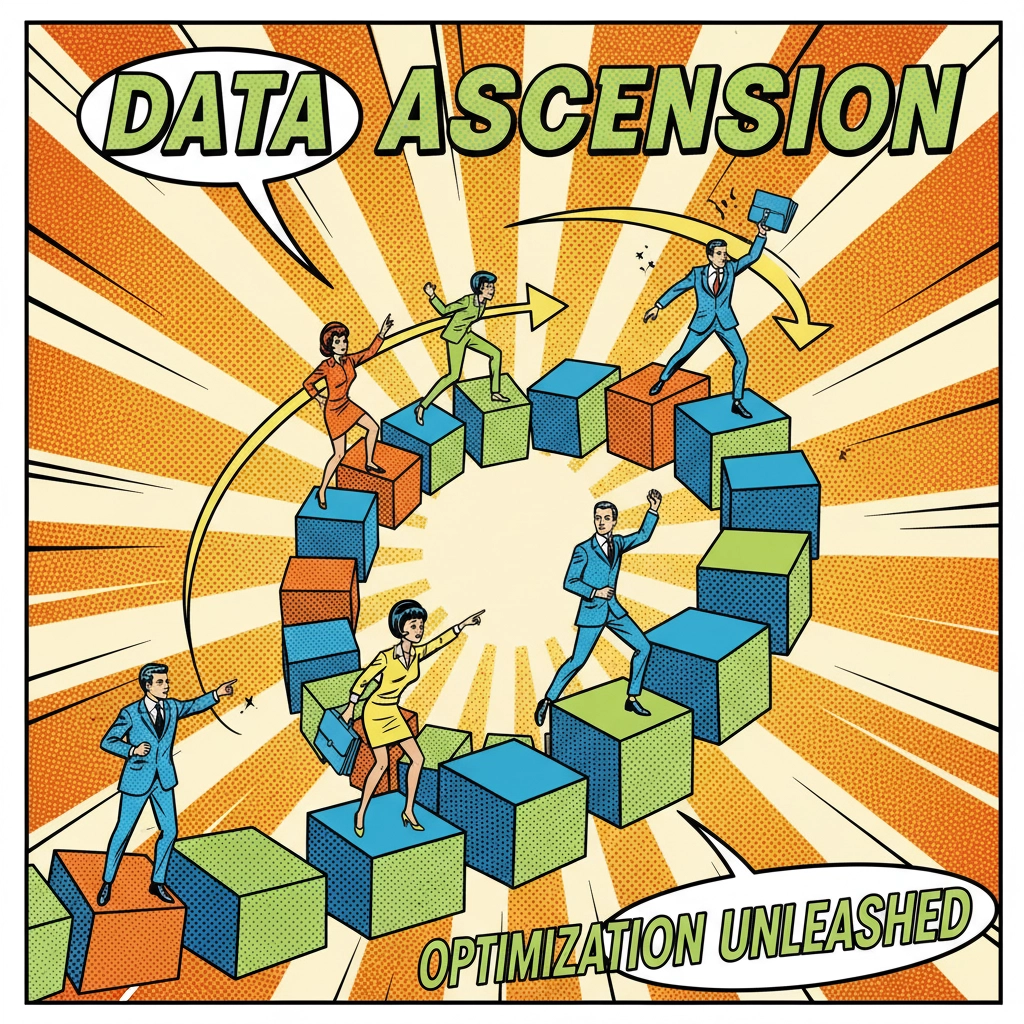
    This iterative process of testing, learning, and refining ensures that AI models remain robust and insights continue delivering actionable value. Organizations that embrace these principles position themselves to achieve sustained competitive advantage in an increasingly AI-driven landscape.

    The framework emphasizes continuous improvement and innovation throughout the AI journey, recognizing that successful AI implementation requires ongoing attention and refinement rather than one-time deployment efforts.

    For organizations beginning their AI journey or seeking to scale existing initiatives, understanding and implementing these seven steps provides a structured approach to data value creation. The combination of proven methodology and robust infrastructure creates the foundation for sustainable AI success.

    As organizations progress through this framework, they often discover that professional guidance and partnership can accelerate their journey significantly. Optrics Engineering works with organizations across government, healthcare, education, and private sectors to develop comprehensive AI implementation strategies that align with this proven methodology, helping transform AI aspirations into measurable business outcomes.

    In our final installment of this series, we will explore how organizations can build their AI Factory from concept to implementation, examining the infrastructure requirements and strategic considerations necessary for long-term AI success.


  • Why Organizations Are Exploring AI: The Shift to Smarter Data Management (Dell AI Factory Series, Part 1)

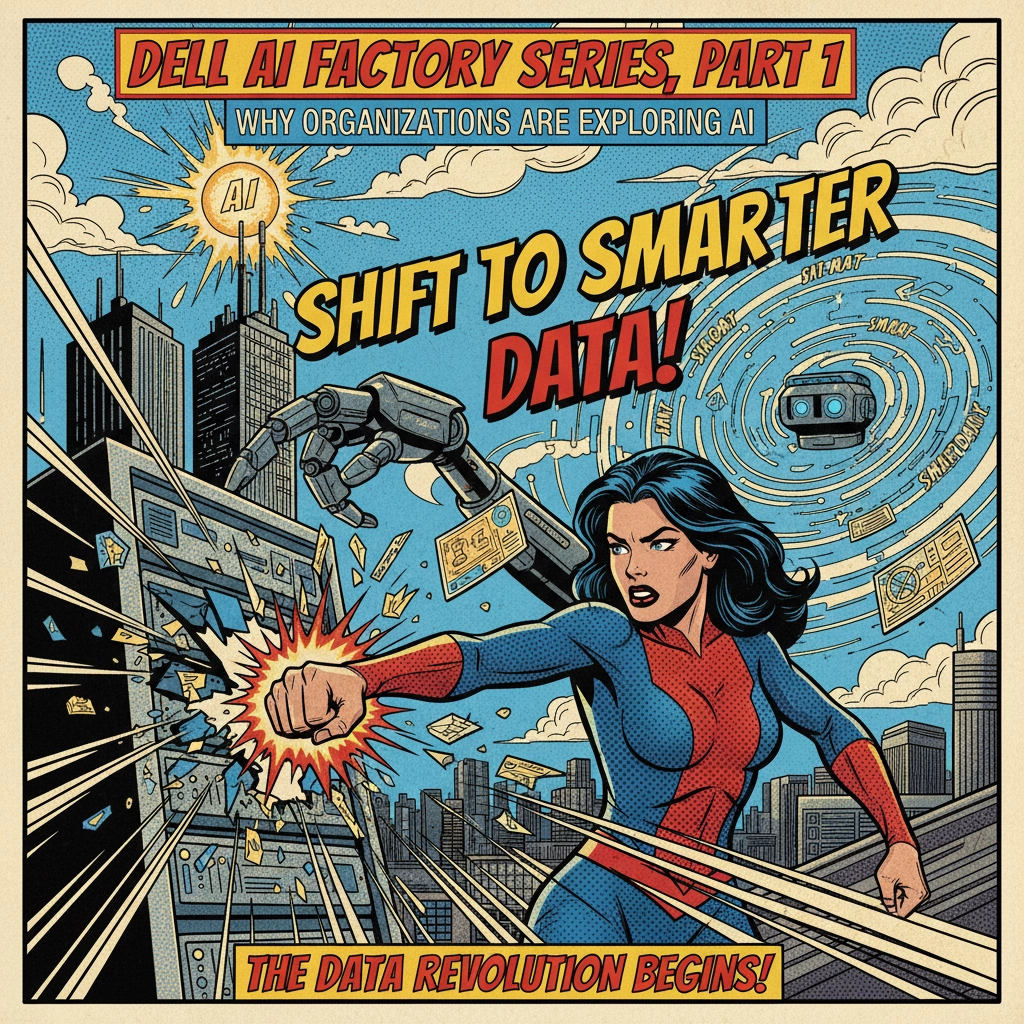
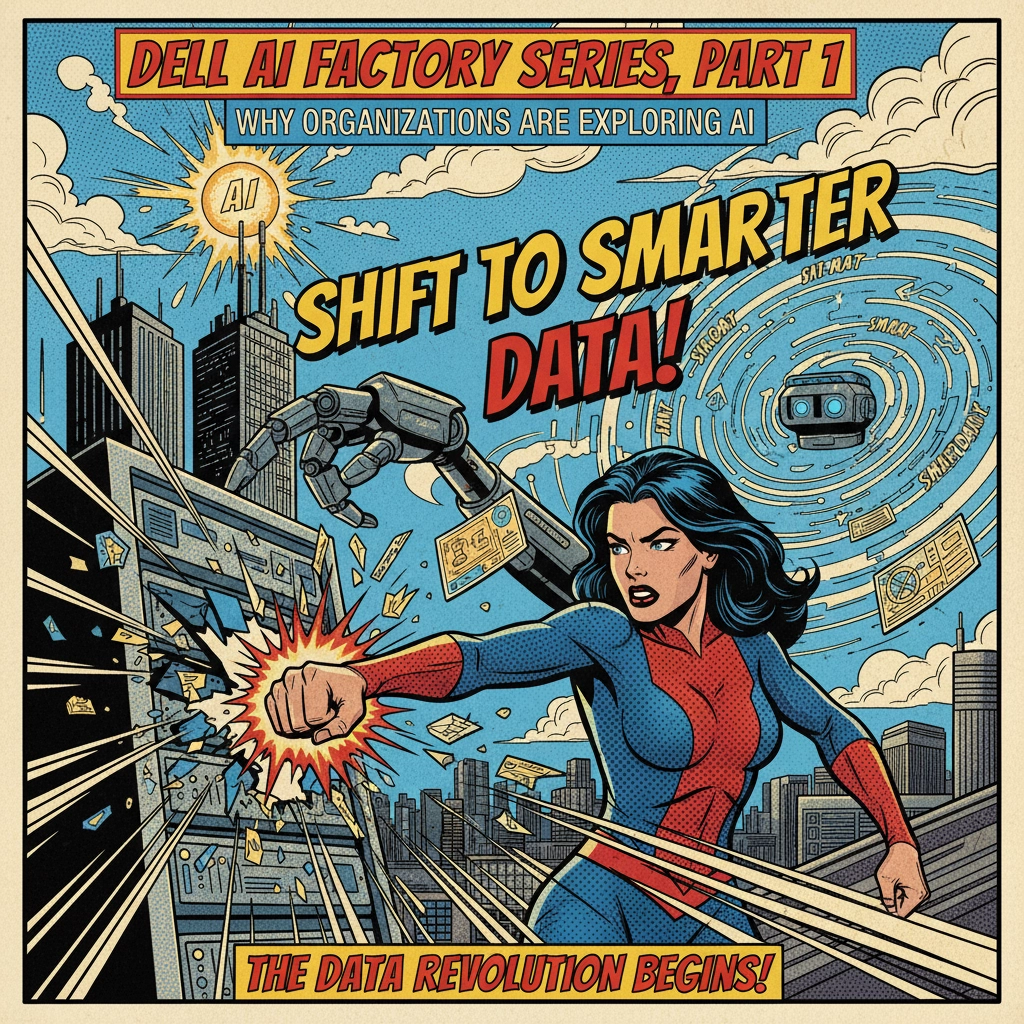
    Why Organizations Are Exploring AI: The Shift to Smarter Data Management (Dell AI Factory Series, Part 1)

    The Data Revolution Begins!

    The artificial intelligence revolution has reached a critical inflection point. Organizations across government, healthcare, education, and private sectors are no longer asking whether they should adopt AI: they are racing to determine how quickly they can implement it effectively. This urgency stems from a fundamental reality: AI adoption has become an imperative for organizational survival rather than merely a competitive advantage.

    The current AI transformation differs dramatically from previous technological shifts in both speed and scope. While past innovations took years or decades to fully permeate organizations, AI adoption is accelerating at an unprecedented pace. More importantly, AI’s potential impact touches virtually every aspect of organizational operations, from decision-making processes to service delivery and resource optimization.

    The Data Management Imperative

    At the heart of every successful AI implementation lies a critical foundation: effective data management. Organizations are discovering that their existing data infrastructure, designed for traditional computing workloads, cannot support the rigorous demands of AI applications. This realization is driving a fundamental shift in how organizations approach data as a strategic asset.

    The challenge extends beyond simply having large volumes of data. Modern AI applications require high-quality, accessible, and properly governed data that can be rapidly processed and analyzed. Organizations must transform their data from a byproduct of operations into the primary fuel for their AI initiatives. This transformation requires new approaches to data collection, storage, processing, and governance.

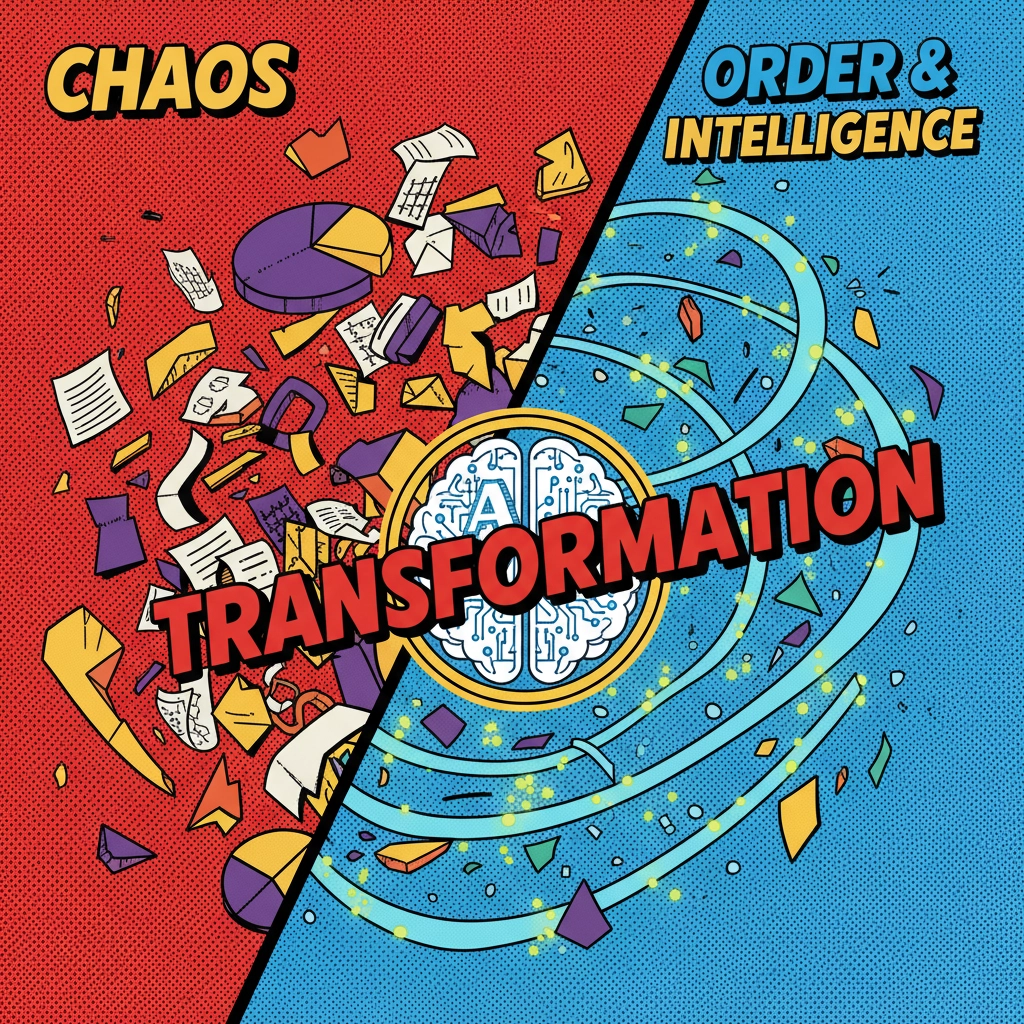
    AI Transformation Brings You Order & Intelligence

    Government agencies, for instance, often possess vast datasets that could revolutionize public service delivery through AI-powered insights. However, these datasets frequently exist in siloed systems with inconsistent formats and varying quality standards. Healthcare organizations face similar challenges, where patient data across multiple systems could enable breakthrough diagnostic AI applications, but integration and privacy concerns create significant barriers.

    Educational institutions are discovering that AI can personalize learning experiences and improve administrative efficiency, but only when their student information systems, learning management platforms, and research databases can work together seamlessly. Each sector faces unique data challenges, but the underlying need remains consistent: organizations require a comprehensive approach to data management that enables AI success.

    Common Pitfalls in AI Implementation

    Research indicates that a significant percentage of AI projects fail to deliver expected value, often due to inadequate data preparation and management. Organizations frequently underestimate the complexity of preparing data for AI applications, leading to implementations that produce unreliable results or fail to scale effectively.

    One prevalent challenge involves data quality issues. Organizations may possess extensive datasets, but if these contain inconsistencies, duplicates, or missing information, AI models trained on this data will produce unreliable outcomes. Additionally, many organizations struggle with data accessibility, where relevant information exists but remains locked in disparate systems that cannot easily communicate with AI platforms.

    Another common pitfall involves the lack of proper data governance frameworks. Without clear policies for data access, security, and compliance, organizations risk creating AI implementations that violate regulatory requirements or compromise sensitive information. This concern is particularly acute for government agencies handling citizen data and healthcare organizations managing patient information.

    The infrastructure challenge represents another significant barrier. Traditional data centers and storage solutions were not designed to handle the computational demands of modern AI workloads. Organizations attempting to run AI applications on inadequate infrastructure often experience performance bottlenecks that render their AI initiatives ineffective.

    The Dell AI Factory Approach

    Dell Technologies has developed a comprehensive framework to address these challenges through the Dell AI Factory approach, built in partnership with NVIDIA. This methodology recognizes that successful AI implementation requires more than just powerful computing hardware: it demands a holistic approach to data management, infrastructure design, and operational processes.

    The Dell AI Factory concept treats AI development and deployment like a manufacturing process, where raw data serves as the input material and actionable intelligence represents the finished product. This approach emphasizes the importance of optimizing every step in the data-to-insight pipeline, from initial data collection through final AI model deployment and maintenance.

    Central to this approach is the recognition that Dell servers and Dell storage solutions must work together seamlessly to support AI workloads. Dell PowerEdge servers, specifically designed for AI applications, provide the computational power necessary for training and inference, while Dell storage systems ensure that data remains accessible and protected throughout the AI lifecycle.

    AI Insights

    The Dell NVIDIA partnership enhances this foundation by integrating advanced GPU acceleration directly into Dell’s server and storage infrastructure. This integration eliminates compatibility concerns and optimization challenges that organizations often face when attempting to build AI systems from disparate components.

    Introducing the Seven-Step Framework

    The Dell AI Factory methodology centers on a seven-step framework for effective AI data management. This systematic approach guides organizations through the process of identifying business needs, discovering relevant data sources, and implementing sustainable AI solutions that deliver measurable value.

    The framework begins with clearly defining the business problem or opportunity that AI will address. This step ensures that technical implementation efforts align with organizational objectives and success metrics. Too many AI projects fail because they focus on implementing impressive technology without clearly articulating the business value they intend to deliver.

    Subsequent steps in the framework address data discovery and preparation, model development and training, deployment processes, and ongoing maintenance and optimization. Each step builds upon the previous ones, creating a comprehensive pathway from initial concept to operational AI implementation.

    This systematic approach proves particularly valuable for organizations that lack extensive AI expertise internally. Rather than attempting to navigate the complex AI landscape independently, organizations can follow a proven methodology that addresses common challenges and incorporates best practices developed through extensive real-world implementations.

    The framework also emphasizes the importance of scalability from the initial planning stages. Organizations that begin with small pilot projects must ensure their underlying infrastructure and processes can support expanded AI initiatives as confidence and capabilities grow.

    The Infrastructure Foundation

    Successful AI implementation requires infrastructure that can handle the unique demands of machine learning workloads. Unlike traditional applications that primarily require processing power and storage capacity, AI applications demand high-performance computing capabilities, massive data throughput, and sophisticated memory management.

    Dell AI servers provide the specialized hardware architecture necessary for these demanding workloads. These systems integrate advanced processors, high-bandwidth memory, and optimized storage interfaces to ensure that AI applications can access and process data efficiently. The server designs incorporate thermal management and power optimization features that enable sustained high-performance operation.

    Storage requirements for AI implementations extend beyond traditional capacity considerations. AI applications require storage systems that can deliver consistent high-throughput data access while maintaining data integrity and availability. Dell storage solutions designed for AI workloads provide the performance characteristics necessary to prevent data access bottlenecks that could limit AI model training and inference speed.

    The AI Infrastructure Foundation

    The integration between Dell servers and storage systems creates a unified platform that simplifies AI infrastructure management while optimizing performance. Organizations can focus on developing and deploying AI applications rather than managing complex infrastructure integration challenges.

    Looking Ahead: Building Your AI Foundation

    Organizations exploring AI implementation face a complex landscape of technological options, vendor solutions, and architectural decisions. The key to success lies in adopting a systematic approach that addresses both immediate AI implementation needs and long-term scalability requirements.

    The Dell AI Factory framework provides a proven methodology for navigating this complexity. By following the seven-step process, organizations can avoid common pitfalls while building AI implementations that deliver sustainable business value.

    In the next installment of this series, we will explore each of the seven steps in detail, providing practical guidance for implementation and highlighting how organizations can leverage this framework to accelerate their AI initiatives. We will examine specific strategies for data discovery, preparation, and governance that form the foundation of successful AI implementations.

    Organizations ready to begin their AI journey should focus on building strong data management foundations while ensuring their infrastructure can support current and future AI requirements. The investment in proper planning and infrastructure today will determine the success and scalability of AI initiatives tomorrow.

    Optrics Engineering works with organizations across all sectors to develop comprehensive AI implementation strategies that align with their specific requirements and objectives. Our expertise in Dell technologies and infrastructure design positions us to guide organizations through every stage of their AI transformation journey. As we continue to expand our AI consulting services, we remain committed to helping organizations unlock the full potential of their data through strategic AI implementations.

  • Dell AI Factory: The Enterprise-Grade Foundation Your AI Strategy Can’t Ignore

    Dell AI Factory: The Enterprise-Grade Foundation Your AI Strategy Can’t Ignore

    Dell AI Factory: Building the Foundation for Enterprise AI Innovation 🚀

    In the race to harness artificial intelligence and it’s transformative potential, organizations face a critical challenge: building robust, secure infrastructure that can support enterprise-grade AI workloads. Dell’s latest partnership with xAI and the integration of the Grok 2.5 model into Dell AI Factory marks a significant milestone in addressing this challenge head-on.

    The Enterprise AI Infrastructure Challenge

    Today’s AI initiatives demand more than just powerful models – they require a foundation that can handle the intense computational requirements of large language models while maintaining security, governance, and reliability. For many organizations, this infrastructure gap has become a significant barrier to AI adoption and innovation.

    Dell AI Factory: Bridging the Gap

    Dell AI Factory emerges as a comprehensive solution to these challenges, offering:

    • Optimized Performance: Purpose-built infrastructure that eliminates bottlenecks and enables real-time AI applications
    • Open Ecosystem Support: Flexibility to integrate various AI frameworks and models
    • Enterprise-Grade Security: Built-in mechanisms for data governance and compliance
    • Scalable Architecture: Ready for demanding workloads and future growth

    The Power of Choice and Control 🔒

    What sets Dell AI Factory apart is its commitment to openness and customization. Organizations can select and deploy AI models and frameworks that best align with their specific needs, avoiding vendor lock-in while maintaining control over their AI journey. The integration of xAI’s Grok 2.5 model exemplifies this approach, offering cutting-edge capabilities within a secure, managed environment.

    Security and Innovation in Harmony

    For cybersecurity and IT professionals, Dell AI Factory addresses critical concerns around:

    • Data governance and compliance
    • Secure model deployment and management
    • Risk mitigation in AI operations
    • Operational transparency and control

    Transforming AI Aspirations into Reality

    Dell’s approach demonstrates that organizations don’t have to choose between innovation and responsibility. The Dell AI Factory provides the infrastructure, tools, and security frameworks needed to accelerate AI adoption while maintaining robust security and governance standards.

    Ready to Transform Your AI Infrastructure?

    The future of enterprise AI demands infrastructure that’s both powerful and principled. Dell AI Factory offers a path forward that balances innovation with responsibility, speed with security, and flexibility with control.

    🔥 Ready to explore how Dell AI Factory can transform your organization’s AI capabilities? Contact us today to schedule a demonstration and discover the potential of enterprise-grade AI infrastructure.

    #AI #EnterpriseAI #Cybersecurity #DigitalTransformation #DellTechnology

    Contact Us Now

  • Dell’s Agentic AI: Powering the Self-Driving Networks of Tomorrow

    Dell’s Agentic AI: Powering the Self-Driving Networks of Tomorrow

    Agentic AI: The Next Frontier in Telecom Network Intelligence 

    The telecommunications industry stands at a pivotal moment of transformation. While traditional AI has revolutionized pattern recognition and basic automation, a new paradigm is emerging: agentic artificial intelligence. This evolution promises to reshape how telecom networks operate, adapt, and serve in an increasingly connected world.

    Beyond Traditional Automation

    Today’s telecom operators face unprecedented challenges. The explosion of connected devices, the complexity of 5G networks, and escalating customer expectations demand solutions that go beyond conventional automation. This is where Dell’s innovative approach to agentic AI comes into play.

    Unlike traditional AI systems that simply respond to predefined patterns, agentic AI operates with autonomous, goal-oriented intelligence. It can:

    • Proactively identify and resolve network issues before they impact service
    • Dynamically optimize resource allocation in real-time
    • Adapt network configurations to changing conditions automatically
    • Drive intelligent decision-making across complex telecom environments

    Transforming Telecom Operations 

    Dell agentic AI solutions are specifically designed to address the critical challenges facing modern telecom operators. By implementing these advanced systems, operators can:

    • Reduce operational costs through self-optimizing networks
    • Accelerate the launch of new digital services
    • Enhance network resilience and reliability
    • Improve customer experience through predictive optimization

    Building a Responsible AI Future 

    Understanding the significance of responsible AI deployment, Dell has adopted a collaborative approach to development and implementation. Working closely with industry partners and standards bodies, Dell ensures its AI solutions are:

    • Fully interoperable with existing telecom infrastructure
    • Compliant with evolving regulatory requirements
    • Aligned with ethical AI principles
    • Secure and trustworthy

    The Power of Ecosystem Integration

    Dell’s commitment to open standards and industry collaboration means telecom operators can confidently integrate these AI solutions into their existing networks while maintaining flexibility for future innovations. This approach creates a foundation for sustainable digital transformation while minimizing implementation risks.

    Moving Forward

    As the telecommunications industry continues its evolution toward software-defined, cloud-native networks, the role of agentic AI becomes increasingly critical. Dell’s solutions provide the intelligence and autonomy needed to navigate this transformation successfully.

    🔍 Want to learn how Dell’s agentic AI solutions can transform your telecom operations? Contact our team today to schedule a personalized demonstration and discover the power of intelligent network automation.

    Contact Us Now